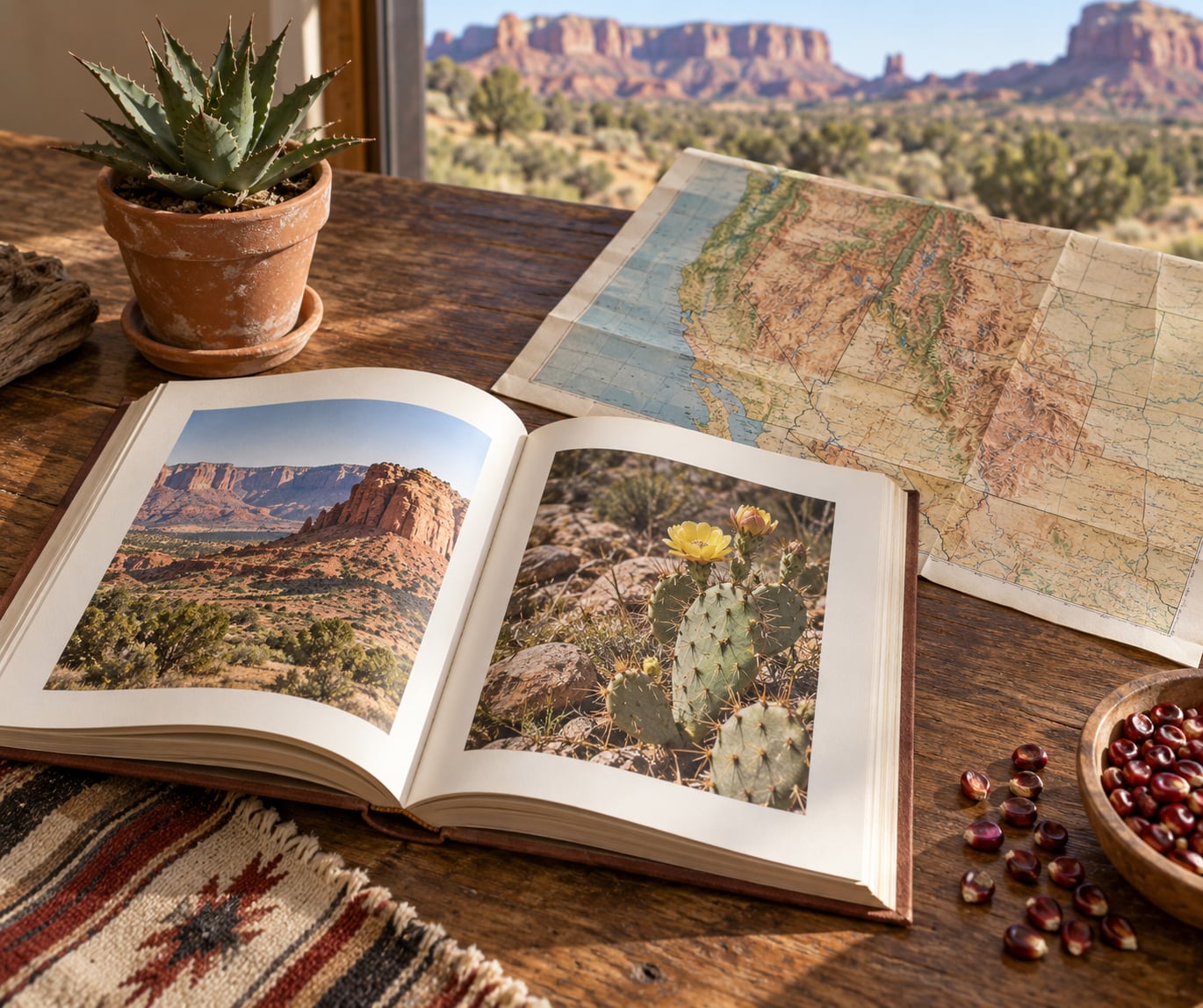
House Made of Dawn is a 1968 novel by Kiowa writer N. Scott Momaday, and it won the Pulitzer Prize for Fiction in 1969. It follows Abel, a World War II veteran who returns to the Kiowa village of Walatowa, kills a man in a drunken fight, serves time in prison, moves to Los Angeles, and finally walks back to Oklahoma to find out who he is. This guide covers the plot, characters, themes, symbols, and historical context, plus study questions for class.
If you are reading the novel for the first time, read the plot section below once and then come back to it whenever the chronology confuses you. The book jumps between 1945 and 1952 without signposting, and that is deliberate, not sloppy. Most students who bounce off it are reading it as if it were a straight line.
Quick facts first, because they are the ones teachers check:
| Author | N. Scott Momaday, a Kiowa writer born in 1934 in Lawton, Oklahoma |
|---|---|
| First published | 1968, Harper & Row |
| Genre | Novel; literary fiction with strong elements of psychological realism and oral tradition |
| Award | Pulitzer Prize for Fiction, 1969 — the first novel by a Native American author to win it |
| Main setting | The Kiowa village of Walatowa, Oklahoma, and Los Angeles, California |
| Time span | Abel’s childhood through the summer of 1952, with a framing scene set just before the final section |
| Plot mode | Nonlinear; Abel recounts his life out of order to Martin, the man hunting him |
| Narration | First person, Abel’s own voice, with lyric and visionary passages |
Table of Contents
- House Made of Dawn Guide: Plot Overview and Full Summary
- The Prologue: A Runner and a Feeling of Pursuit
- Walatowa, 1945: Homecoming, Milly, and the Killing
- Prison, the Termination Ward, and Los Angeles, 1952
- Los Angeles: Martin, Angela, and the Drinking
- The Dawn Runner, Walatowa, 1952: Ceremony and the Race of the Dead
- What Does the Title ‘House Made of Dawn’ Mean?
- What Historical and Cultural Context Should Readers Know?
- House Made of Dawn Guide: Key Context and Timeline
- About N. Scott Momaday
- Who Are the Main Characters in House Made of Dawn?
- What Are the Major Themes in House Made of Dawn?
- Identity and Cultural Survival
- Connection Versus Isolation
- Ceremony, Religion, and Belief
- Land and Belonging
- War Trauma
- Guilt, Responsibility, and Sacrifice
- Oral Tradition and Storytelling
- How Does House Made of Dawn Compare to Ceremony and Their Eyes Were Watching God?
- Teaching Notes: Sensitive Content in the Novel
- How Do Symbols and Motifs Shape the Novel?
- The Sunrise and the Wolf: The Two That Matter Most
- What Is the Narrative Structure and Point of View?
- How to Keep the Timeline Straight
- How Does Momaday Write About the Land and Setting?
- What Do the Unfamiliar Cultural Terms Mean?
- What Do Readers and Students Often Misread?
- What Study Questions and Analysis Prompts Are Useful?
- Plot and Structure
- Characters and Point of View
- Themes and Symbols
- Setting and Craft
- A Model Thesis and Outline
- Frequently Asked Questions
- What is the main message of House Made of Dawn?
- Why does Abel return to Oklahoma in House Made of Dawn?
- Who is Tree, and why is he important to Abel’s story?
- What does the wolf symbolize in House Made of Dawn?
- What does the ending sunrise mean in House Made of Dawn?
- How can a student write a strong thesis about House Made of Dawn?
- Conclusion
House Made of Dawn Guide: Plot Overview and Full Summary
Abel, a Kiowa man in his mid-thirties, is running across the high desert outside Los Angeles at night. A man has been tracking him with a rifle and a trained dog. Abel stabs him with a knife, sleeps for a few hours in an apartment, and then spends the rest of the novel walking back to Oklahoma. Everything between the stabbing and the walking is Abel’s memory, told out of order.
Here is the whole story in five movements.
The Prologue: A Runner and a Feeling of Pursuit
The novel opens with Abel exhausted, half-starved, and moving across dry open country outside the city. He has been living rough for a long time. The man pursuing him is not a killer or a police officer, just someone doing a job, and that ordinariness matters: Abel’s crisis is not a chase scene, it is a man who has stopped being able to live among other people.
Abel kills the pursuer with a knife. He makes his way to the apartment of Angela St. John, an art student he once loved in Los Angeles, sleeps in her bed, and leaves before she wakes. That is the frame for everything that follows.
Walatowa, 1945: Homecoming, Milly, and the Killing
Abel was born around 1916 to a Kiowa family in Oklahoma. His early life is a chain of losses. His older brother Vidal dies in a fire on a farm in Texas, and Abel, a small boy, is the one who runs away from the burning building and survives. His mother dies of pneumonia. Abel leaves home at sixteen, is taken in and then dropped by a series of people, and ends up working for a man named Martin who becomes a kind of substitute father.
His grandfather Francisco and the rest of the family had been moved off the land by federal policy into a government relocation camp and then into a trailer park. When Abel comes back in 1945 for Francisco’s funeral, the old village site has been bulldozed. He finds a row of corn growing over concrete slabs, and under the concrete the bones of his grandfather and his brother Vidal.
He stays in the area with relatives including Milly and her husband. Abel drinks heavily. In a fight outside a dance hall he cuts down a man named Juan Reyes, the albino son of a respected local family. The novel links the knife to the one Angela St. John gave Abel in Los Angeles. When men from the Reyes family come looking for a man they believe responsible, Abel kills again while trying to get away.
Prison, the Termination Ward, and Los Angeles, 1952
Abel is arrested and tried. The Reyes family accuses him of witchcraft as well as murder, and the trial stalls. Abel is acquitted by the jury. On the way back to custody, a guard named Wilson buys him drinks, passes out, and abandons him in a field. By then a second killing has happened in which an Indian agent dies, and when Abel walks back and confesses to it, he is convicted and sent to prison.
In prison Abel is transferred to a ward for Native patients, a place the novel calls a termination ward. He is eventually released into a program that gives Native people new names and new clothes and puts them on buses. He is sent to Los Angeles and given a job at a gas station.
Los Angeles: Martin, Angela, and the Drinking
The longest single section of the novel follows Abel in the city. He works, he watches television, he drinks. He meets Angela St. John again, now an art student with money and plans for an apartment in Paris. She gives him a knife, teaches him to cook and to dance, and expects him to grow into someone she can introduce to her friends. Abel wants this and cannot hold it.
He abandons her, drinks for weeks, is beaten by police, and drifts out of the city. He works as a ranch hand, sleeps rough, and runs across the desert on a long spiritual fast that resembles the rite he will later perform in Oklahoma. A man tries to take him in, and Abel kills him. He returns to Angela’s apartment, sleeps, and leaves again.
The Dawn Runner, Walatowa, 1952: Ceremony and the Race of the Dead
Abel goes back to Oklahoma on foot, arriving in the village during a Christian religious revival. The town has been rebuilt as a highway stop with aluminum siding and trailer houses. Some relatives barely recognize him; others say his brother was declared dead years ago.
He finds Judge John Big Bluff Tosamah, a very old Kiowa man and a kinsman of Abel’s who is called the Keeper of the Sacred Hoop and the Priest of the Sun. Tosamah asks Abel a simple question: who are you? Abel has no answer. Tosamah tells him that at dawn he will give Abel his answer, which turns out to be silence. Instead he gives Abel a physical discipline: a ritual run before sunrise, repeated until Abel can face the sun.
Abel fasts, runs, and falls into a series of visions. He sees an eagle and a serpent fighting over a carcass, an old man dying alone in a cave, a coyote turning into a wolf, and a great killing bird rising over everything. Finally he stands on a high place in the dark and watches the light come up. He has been given a new name, Abel meaning the breath of life or the beginning.
The last pages settle the question of who he is to his family. He works, he marries, and when his daughter is born he laughs out loud with her, laughing because he sees the sun come up on the day he was born.
What Does the Title ‘House Made of Dawn’ Mean?
House Made of Dawn is the name of a Navajo Night Chant healing prayer. Momaday found the phrase while researching an essay and it stayed with him. The title works two ways: the poem is a house built at daybreak, a temporary shelter for a person in the middle of dying and being reborn. For Abel, the novel’s last movement is the moment he builds that house and lives in it.
What Historical and Cultural Context Should Readers Know?
Context explains the pressure in this novel, but it is not a substitute for reading it. Abel’s despair is not simply personal bad luck. It is what happens to a person whose family, language, and land have been dismantled by policy, and then sent to a city that had no idea he existed.
The Kiowa were a Plains people whose territory once covered parts of what is now Kansas, Oklahoma, and Texas. By Abel’s lifetime that land had been broken up by allotment, in which tribal lands were divided into individual parcels and the surplus sold off to non-Native settlers. Then came the Indian Reorganization Act of 1934 and the policy of termination in the 1950s, which aimed at dissolving tribes altogether. The relocation programs moved families off land they had held for generations into camps, housing projects, and trailer parks.
Abel’s war service runs from 1941 to 1945 in the Pacific. Native veterans came home to a country that had just gone to war alongside them and then treated them as strangers at home. His return in 1945 to find his grandfather’s grave under a concrete slab is the single most concrete fact in the novel.
Momaday published House Made of Dawn in 1968, at the height of a Native American literary renaissance that also included Leslie Marmon Silko’s Ceremony, James Welch’s Winter in the Blood, and Dee Brown’s Bury My Heart at Wounded Knee. In April 1969 the novel won the Pulitzer Prize for Fiction. It was the first novel by a Native American writer to do so, and that recognition is part of why the book is still taught.
House Made of Dawn Guide: Key Context and Timeline
| Circa 1916 | Abel is born to a Kiowa family in Oklahoma |
|---|---|
| Childhood | Vidal dies in a farm fire; Abel runs from the burning building and survives. His mother dies of pneumonia |
| 1941 to 1945 | Abel serves in the Pacific in World War II and returns a veteran |
| 1945 | He goes back to Walatowa for his grandfather’s funeral and finds the bulldozed village site |
| Late 1940s | The murders, the trial, three years in prison, and the termination ward |
| 1940s to 1952 | The federal relocation program moves his family into a trailer park; his brother Vidal is declared dead |
| 1952 | Abel is released to Los Angeles and works there; the framed killing takes place |
| Summer 1952 | Abel walks back to Walatowa and performs the race of the dead at dawn |
| 1968 | The novel is published by Harper & Row |
| 1969 | Won the Pulitzer Prize for Fiction, the first Native American novel to do so |
About N. Scott Momaday
Momaday was born in Lawton, Oklahoma, and grew up partly on the Kiowa reservation near his mother’s family. He was an only child, which shapes a lot of his work. His 1968 novel was his first book, and he later said it began as a smaller piece about his own family.
He went on to write The Way to Rainy Mountain (1969), a short work of family memoir that is required reading in most Native American literature courses, and the novel Ceremony (1977) was not by him — it is Leslie Marmon Silko’s, and the two books are frequently taught as a pair. Momaday’s later books include The Ancient Child, The Namesake, Town Talk, and The Man Made of Words.
Who Are the Main Characters in House Made of Dawn?
Abel is the only character who changes. Everyone else in the novel functions as a force acting on him: a memory, a hand, a voice, a judgment. Abel is a Kiowa man of about thirty-six at the end of the novel, a veteran, a drifter, and a man who has been told by everyone around him that he is worthless or dead.
He is also a narrator who cannot tell his own story in order. That is the point. His memories surface attached to places and objects rather than to dates, so the novel reads like a mind trying to get hold of its own past.
| Character | Role | Function in the story |
|---|---|---|
| Abel | Protagonist and narrator | Veteran, prisoner, drifter; a man searching for a usable identity and eventually given the name Abel |
| Francisco | Abel’s grandfather | Dies before Abel arrives home; his grave under a concrete slab is the novel’s central image of loss |
| Vidal | Abel’s brother | Dies in a childhood fire; declared dead after relocation so Abel can be the last of the family |
| Judge John Big Bluff Tosamah | Old Kiowa man, Priest of the Sun, Keeper of the Sacred Hoop | Teaches Abel the ritual run and the belief that healing is possible; the novel’s spiritual center |
| Juan Reyes | The albino, son of a respected family | Abel’s first murder victim; his death triggers the trial, the witchcraft accusation, and the prison sentence |
| Milly | Abel’s relative in Oklahoma | Takes him in when he comes home, then is found murdered; the loss removes his last anchor in the trailer park |
| Father Olguin | Catholic priest | Attempts to convert Abel and to discipline him; a marker of institutional power over Native life |
| Martin | Abel’s employer on a ranch | Offers Abel a kind of harsh mentorship and is present at the very end of the framing scenes |
| Angela St. John | Art student in Los Angeles | Offers assimilation and a modern life; gives Abel the knife and is left behind by him |
| Benally | Young Kiowa man in Los Angeles | Tries to teach Abel the peyote way and to bring him into a community that no longer exists |
| Ah-changing | Abel’s great-grandmother | Reported dead and rumored to be a witch; her bones are found in the cornfield at Walatowa |
Pronunciation help, since half the confusion in the first reading is oral: Abel is AY-bul or ah-BELL, Walatowa is wah-lah-TOH-wah, Tosamah is toh-SAH-mah, and Benally is beh-NAHL-ee. Read the names aloud once before class. It helps.
What Are the Major Themes in House Made of Dawn?
The novel runs on seven connected themes. If you can name them and give one scene for each, you can answer almost any question about the book.
- Identity and cultural survival — Who is Abel when everything that defined him has been removed?
- Connection versus isolation — Every person he meets either fails to hold him or releases him.
- Ceremony, religion, and belief — The Christian revival in Walatowa against the Kiowa rites.
- Land and belonging — Possession of a place is the same as possessing a self.
- War trauma and disconnection — What the Pacific did to a young man, and what it undid in him.
- Guilt, sacrifice, and responsibility — The dead he carries and the dead he caused.
- Oral tradition and storytelling — Story as the container that makes a life hold together.
Identity and Cultural Survival
Abel’s crisis is an identity crisis, but not in the way people usually mean that phrase. He does not go looking for his roots. He is thrown out of them. His grandfather, his brother, and his village are physically buried under a road project, so there is nothing left to return to except the memory of the location.
The novel argues that identity is built out of relationships and obligations, not out of ancestry alone. Abel is biologically Kiowa and functionally lost, because ancestry without living community is just information. The moment Tosamah asks him who he is, the novel makes the question explicit and refuses an easy answer.
Connection Versus Isolation
Look at who Abel is offered as a possible anchor: his relatives in the trailer park, Angela St. John, Benally, the ranch hand Martin. Every one of these connections requires Abel to become a different person, and he cannot sustain the change. He is not antisocial. He is exhausted.
The one relationship that asks nothing of him is the ritual itself. The run before dawn is not a conversation, and it does not require him to perform. That is why it works when everything else fails.
Ceremony, Religion, and Belief
Walatowa in 1952 is hosting a Christian revival, and Momaday uses it as a measuring stick for how far the community has moved from older practice. Abel stands outside these meetings rather than in them. The novel also draws a sharp contrast between symbolic religion, which offers identity without demands, and demanding ceremony, which is Abel’s path back.
Benally’s peyote gatherings in Los Angeles sit in the middle: an attempt to rebuild a ritual practice that had already come apart. The novel is honest that this cannot work. Most of the people at the gatherings are already lost.
Land and Belonging
The corn over the concrete slab is the image students remember, and it works because it is literal. Abel’s family history has been paved over. When the novel returns to Walatowa at the end, the town has been rebuilt with aluminum siding and trailer houses, and the traditional round houses are gone.
Momaday treats land as memory held in common. Losing it is not a financial event. It is an erasure of the record of who you are, which is why the graves cannot be moved without destroying the story.
War Trauma
Abel’s service in the Pacific is described mostly in fragments, which is how traumatic memory actually works. He saw the bombing of Hiroshima. He came back to a country that had changed while he was gone, and he was still treated as an outsider in his own hometown.
The drinking is not a personality flaw in this novel. It is a symptom, and the way Abel uses it shows the same pattern in every setting: intoxication removes the obligation to be a person, then leaves him with worse consequences than before.
Guilt, Responsibility, and Sacrifice
Abel is not a sympathetic protagonist in the ordinary sense. He kills two men, he abandons Angela, he drinks his relatives away, and then he confesses to a second killing of his own accord. A good essay can argue that his confession is the most honorable thing he does, and that the novel treats the move as a sacrifice that finally restores his standing as a person who answers for his acts.
Note that Momaday does not offer punishment as absolution. Abel goes to prison, and the novel does not pretend that suffering erases guilt. It only makes a person capable of facing the dawn.
Oral Tradition and Storytelling
The novel is built the way a spoken story is built: circular, digressive, returning again to the same images. Abel tells his life to Martin in a barn, in fragments, and the telling is the healing. His great-grandmother Ah-changing was a witch partly because stories about her outgrew her.
If you are writing about form, this is the argument: the fracture in the chronology is not a trick. It is the shape that guilt takes when a person tries to say it out loud.
How Does House Made of Dawn Compare to Ceremony and Their Eyes Were Watching God?
Readers and teachers pair this novel with three others constantly, so it is worth knowing what the pairings actually show.
Leslie Marmon Silko’s Ceremony (1977) is the closest companion. Tayo, its protagonist, returns from the same kind of war trauma and finds his Pueblo village in the same state of damage, and Silko fixes what Momaday leaves broken, with a narrative voice that comes straight out of oral tradition. If you read the two together, the useful question is which book trusts the reader more.
Zora Neale Hurston’s Their Eyes Were Watching God (1937) offers a useful contrast in voice. Janie Crawford tells her own story in long, unbroken narrative stretches, while Abel’s is broken up. Both are first person and both are about a person trying to understand her or his own life, which makes the contrast about form rather than subject a strong essay topic.
James Welch’s Winter in the Blood (1973) is the third pairing worth knowing. It follows Thomas Builds-the-Fire coming home to the reservation and confronting the gap between how things were and how he imagined them, which is the same problem Abel faces with the bulldozed village site.
Teaching Notes: Sensitive Content in the Novel
The novel contains a suicide, heavy alcoholism, racism toward Native people, domestic violence, the murder of children, and language from the 1960s that students may find jarring. None of it is gratuitous, and none of it is signposted in advance, so it is worth warning students before they start rather than handling it afterward.
Two items usually need a plan. The suicide in the Los Angeles section is the most disturbing, and students who are struggling themselves should be given the option to talk through it privately. The 1960s depiction of white women, particularly in the Los Angeles passages, has been criticized by contemporary readers as dated and reductive, and it is defensible to treat the novel as a period text on that point rather than pretending the concern does not exist.
Terminology is a third item. The novel uses words that were standard in its period and that many readers now avoid. Discussing that choice explicitly is more useful than quietly normalizing it.
How Do Symbols and Motifs Shape the Novel?
Symbolism in this novel is built from things Abel sees rather than things the narrator explains. Keep to images that repeat, and you will stay on solid ground. Anything you have to invent a meaning for is probably over-reading.
| Symbol | Meaning | Where it appears |
|---|---|---|
| Dawn and sunrise | Renewal and the completion of a cycle; also the moment of exposure, when nothing is hidden | The title, the ritual run, and the final scene with his daughter |
| The wolf | Hunger, wildness, and the solitary state; later a transformation rather than a threat | The opening run, the desert sections, and the visions |
| The eagle and serpent | Opposed powers in the natural world; the struggle above the world and the world’s smallness below | The visions during Abel’s fast |
| The knife | Daily utility that becomes lethal; it carries the story from intimacy to violence | Angela gives it to Abel in Los Angeles, and it is the murder weapon |
| Rain | Release and restoration; water as the opposite of the dry, dead world Abel carries | The arrival in Walatowa and the closing movement |
| Corn | Life growing over death, the visible proof that the land has not forgiven what was buried in it | The 1945 return to the bulldozed village site |
| The road and running | Being between places, having no claim to any of them | Abel’s walk from Los Angeles to Oklahoma |
| The violin | Art that survives a broken life; music as an inheritance | Abel’s mother Eulalie and his childhood |
| The whip and the revival | Submission dressed up as faith | The Christian meetings at Walatowa in 1952 |
The Sunrise and the Wolf: The Two That Matter Most
Most students ask about the sunrise and the wolf first, so here is the defensible reading for each.
The wolf in the opening is a condition, not a monster. Abel has been living on what he can find, moving at night, avoiding people. In the visions the wolf changes form, which is the novel’s hint that the wild state is a stage of his life rather than his final shape.
The sunrise at the end is not a reward for being good. Abel has done terrible things and the novel does not undo them. The sunrise is the deadline of his ritual and the condition of his healing. It is also the literal subject of the title: a house made of dawn is built once, at a specific hour, by a person who got up to meet it.
What Is the Narrative Structure and Point of View?
The novel is told in first person by Abel, and it is not chronological. The frame is the desert pursuit. Inside it, Abel talks to Martin in a barn and to no one else, and his recollections surface in whatever order memory gives them: a knife before a house, a cornfield before a grandfather.
Several sections shift into something closer to visionary narration. During the fast, the prose stops reporting actions and starts recording perceptions. Textbooks call the novel psychological realism, which is accurate but slightly cold. The better description is that the book is built the way a person tells their own life when they have finally stopped managing the story.
Two structural choices matter for essays. First, the reader learns the murders before we understand why they happened, which makes the trial scene an exercise in interpretation. Second, the prologue is the last event in the timeline, so the book begins at the point of no return and spends its length explaining how he arrived there.
How to Keep the Timeline Straight
Draw four boxes on paper and fill them in as you read. Box one is the desert prologue, the pursuit and the killing of the pursuer. Box two is Abel’s childhood and war in a single column, because those memories are recalled out of order but belong to one period.
Box three is Oklahoma in 1945 through the trial, the prison, and the ward. Box four is Los Angeles in 1952. Box five is the walk back and the ritual. Once those five boxes exist, the flashbacks stop being confusing, because you can see which box each interruption belongs to.
The trial is the only place where the book deliberately repeats itself, telling the same events from the point of view of the people who accuse Abel. That is deliberate design, not a printing error, and noticing it is worth points in a seminar.
How Does Momaday Write About the Land and Setting?
Two places carry almost all the meaning: the Kiowa village of Walatowa and Los Angeles. Momaday sets them against each other deliberately, and the comparison holds up in discussion.
Wolatowa is described as open, high, and windy, with a horizon that goes on past the eye. Los Angeles is enclosed, paved, hot, and full of noise. In one, people are known by their families. In the other, nobody knows Abel’s name, and he is only ever an employee or a problem.
Pay attention to the verbs. Out West the characters walk, run, watch, and wait. In the city they drive, drink, buy, and flee. That difference in movement is the difference between the two lives, and it is easy to quote in a paragraph.
The desert is not empty scenery in this novel. It is where Abel goes when he cannot be a person anywhere else, and it is also where he learns to stay still long enough to have a vision. The last walk from Los Angeles to Oklahoma uses that terrain as a bridge rather than an obstacle.
What Do the Unfamiliar Cultural Terms Mean?
Most of the confusion students report with this novel comes from terms the text assumes you know. Define these before you write anything.
| Walatowa | The Kiowa village in Oklahoma that Abel’s family was pushed out of; the name is used throughout as the emotional center of the book |
|---|---|
| Night Chant | A Navajo healing prayer; the source of the novel’s title and its central metaphor of a house built at daybreak |
| Priest of the Sun | The religious role held by Tosamah, who conducts the sunrise ritual and preserves older Kiowa practice |
| Race of the dead | Abel’s ordeal during the fast, in which he runs toward the rising sun until he can face it |
| Peyote ceremony | A Native American religious rite involving peyote; in the novel it is Benally’s attempt to rebuild a practice that has already broken down in Los Angeles |
| Eagle Watchers | A Kiowa society with ceremonial responsibility; named as part of the world the novel’s Christianity displaces |
| Relocation | Federal policy of moving Native families off reservations into government housing and trailer parks |
| Termination ward | A prison ward for Native inmates, associated with the federal policy of ending tribal status |
| Walatowa’s Christian revival | The religious meetings Abel walks past on his return, used as a measure of how far the community has moved from older practice |
What Do Readers and Students Often Misread?
Five mistakes come up in almost every class discussion, and a short paragraph on each will save you an argument.
The timeline. Students assume the book is confused. It is not. The prologue is set after the Los Angeles section and before the Walatowa section, and the trial scenes are told twice from different angles on purpose.
Abel’s motives. It is common to argue that Abel is a good man in a bad world. The evidence points the other way. He is responsible for several deaths and for abandoning the people who helped him. Any good essay has to account for that rather than explain it away.
Tree, Viola, and Grandma. If your class is reading Ceremony alongside this novel, expect the names to get crossed. Tree Boy, Viola, and Grandeama belong to Leslie Marmon Silko’s Ceremony. Abel’s actual spiritual teacher is Judge John Big Bluff Tosamah, the Priest of the Sun.
The ending. The final sunrise is often read as Abel becoming a saint. A better reading is that he has completed a discipline, been given a name, and come home to a family he can finally be part of. Ordinary life, not apotheosis.
Symbolism versus universalism. It is tempting to write that the novel shows everyone is connected to the land, which flattens the Kiowa-specific content into a general slogan. The novel’s argument is specific. It is about a particular people, a particular forced removal, and particular ways of knowing that were built for a particular place.
What Study Questions and Analysis Prompts Are Useful?
These work for a seminar, a book club, or an exam. Use the section groups if you have limited class time.
Plot and Structure
- Why does Momaday open the novel with the pursuit rather than with Abel’s childhood?
- How does the trial scene change what you think you know about the murders?
- What changes between the beginning of the book and its final movement?
- Why does Abel confess to the second killing, and what does the confession reveal about him?
Characters and Point of View
- Angela St. John offers Abel a life in Los Angeles. Why does he leave?
- How does Tosamah’s question, who are you, function differently from anything Abel has heard before?
- What does Abel’s relationship with Francisco, who is dead for most of the novel, tell us about him?
- How does the first person narration shape your sympathy toward Abel?
Themes and Symbols
- What does the corn growing over the graves mean for the theme of land and belonging?
- Compare the knife in Los Angeles with the knife in Oklahoma. What changes, and what does the connection cost Abel?
- Does the ritual run at the end count as a religious experience, a psychological one, or both? Defend your answer with evidence.
- The Christian revival in Walatowa and the Kiowa ceremony are both belief systems. How does the novel treat them differently?
Setting and Craft
- How does Momaday’s description of the desert differ from his description of Los Angeles?
- Where do you notice the prose shift from plain reporting to vision?
- Is the circular structure of the novel an accurate representation of memory, or an avoidance? Answer with passages.
A Model Thesis and Outline
Thesis: In House Made of Dawn, Momaday uses the ritual run before sunrise to argue that Abel’s guilt cannot be resolved by punishment or by forgetting, and that healing only becomes possible when he accepts responsibility, takes on a Kiowa identity, and takes up residence in a specific place and a set of relationships.
Outline: Paragraph one establishes Abel’s guilt, including the murders and his later confession. Paragraph two traces the failures of every relationship that does not demand ritual obligation of him, from Angela to Milly. Paragraph three examines Tosamah’s question and the race of the dead as a demand he can meet. Paragraph four reads the final sunrise as a homecoming tied to land and family rather than an escape from guilt.
Frequently Asked Questions
What is the main message of House Made of Dawn?
The main message is that a person’s identity survives only when it is tied to community, place, and responsibility. Abel’s guilt over the murders is not erased by prison or by forgetting, and it is not healed by converting to someone else’s religion. Healing comes when he accepts who he is, performs the Kiowa ritual run before dawn, and returns to his family. The sunrise at the end represents a new beginning built on duty rather than denial.
Why does Abel return to Oklahoma in House Made of Dawn?
Abel returns because he is driven out of Los Angeles, having lost his job, abandoned Angela St. John, and exhausted every relationship that held him there. He has no money and no other option, so he walks toward Oklahoma and toward the remains of the life he lost. The town he reaches is not the one he remembers, and his family has been relocated, but the place itself still contains the answer he needs. The return is both practical and spiritual.
Who is Tree, and why is he important to Abel’s story?
Tree Boy is not a character in House Made of Dawn. He appears in Leslie Marmon Silko’s Ceremony, a novel often taught alongside this one, which explains why the two names get mixed up. Abel’s spiritual teacher in this novel is Judge John Big Bluff Tosamah, the Kiowa Priest of the Sun, who asks Abel who he is and later teaches him the ritual run before dawn. If your class is reading both novels, keeping the two separate will prevent a lot of confusion.
What does the wolf symbolize in House Made of Dawn?
The wolf stands for Abel’s wild, solitary state: hunger, movement, and life outside human community. In the opening scenes he is running from a hunter and eating what he can find. In the visions during his fast the wolf changes form, which suggests that this state is a stage rather than a final identity. Read alongside the road and the desert, the wolf helps show a man who is between places and has not yet accepted where he belongs.
What does the ending sunrise mean in House Made of Dawn?
The sunrise is the payoff of the title and the completion of Abel’s ritual discipline. He rises before dawn to run until the light arrives, and the light is the moment of exposure and renewal that the Night Chant prayer refers to. It does not mean his crimes are forgiven. It means he has done the work that lets him stand in the open again, which the novel shows in an ordinary domestic scene with his daughter on his shoulder.
How can a student write a strong thesis about House Made of Dawn?
A strong thesis makes a claim that could be argued and grounds it in specific scenes. Instead of saying the novel explores identity, argue something narrower, such as the one in the sample outline above: that Momaday uses the ritual run to argue healing requires responsibility and reconnection to place. Name the scene, quote briefly, and explain how the detail proves your point. Avoid summarizing the plot in the first paragraph and avoid judging Abel without evidence.
Conclusion
House Made of Dawn argues that survival becomes possible only through responsibility, cultural connection, and a renewed relationship with land. Abel is not redeemed by punishment or by a change of scenery. He is given a discipline, a name, a family, and a place, and those four things together make him legible to himself again.
Start with the corn over the concrete slab and read forward from there. That single image holds the novel’s argument about history, land, and identity, and every question you are likely to be asked in class grows out of it.