If you are searching for a midsummer night’s dream study guide that explains the plot without skipping ahead, you are in the right place. This guide covers the whole play, act by act, with characters grouped by faction, themes tied to specific quotations, and a method for writing an essay that actually scores. It is written for GCSE, IGCSE and AP English Literature students, for anyone meeting Shakespeare at university, and for teachers building a unit.
Updated for 2026. No paywall, no sign-up, and nothing skipped at the end, which is where the reconciliation, the ruined play and Puck’s epilogue all happen.
Table of Contents
- Quick Facts About A Midsummer Night’s Dream
- What Is A Midsummer Night’s Dream Study Guide? What the Play Is About
- Who Are the Main Characters in A Midsummer Night’s Dream?
- What is the Bottom like in a Midsummer Night’s Dream?
- Who is Puck in A Midsummer Night’s Dream?
- Why does Oberon want the changeling boy?
- What Is the Plot of A Midsummer Night’s Dream?
- Act 1: A wedding is announced and a family breaks open
- Act 2: The fairies quarrel and the flower is picked
- Act 3: The wrong man is enchanted and the lovers meet
- Act 4: Bottom’s ass head and the lovers’ tangle
- Act 5: The lovers are restored, the play is ruined, and Puck closes the show
- What Are the Major Themes in A Midsummer Night’s Dream?
- How Does Love Shape the Play?
- What Is the Role of Magic and Mistaken Identity?
- Why Does the Natural World Break Apart?
- How Do Dreams and Illusion Work in the Play?
- What Do the Most Important Symbols and Motifs Mean?
- Which Scenes Should Students Study Most Closely?
- The quarrel in Act 1, Scene 1
- Helena alone in Act 2, Scene 1
- Lysander’s speech to Helena in Act 3, Scene 2
- Theseus’s speech in Act 5, Scene 1
- Puck’s epilogue in Act 5, Scene 1
- Pyramus and Thisbe in Act 5, Scene 1
- The mechanicals’ rehearsal in Act 3, Scene 1
- Act 4, Scene 2, the lovers and the donkey
- Is A Midsummer Night’s Dream Age Appropriate?
- How Do You Write an Analysis of A Midsummer Night’s Dream?
- Step one: make a claim that someone could disagree with
- Step two: quote two things that look like opposites
- Step three: explain the technique, not just the feeling
- Step four: connect the evidence to the bigger idea
- Step five: say what the complication is
- Model thesis statements to start from
- What should GCSE, AP Literature and undergraduate readers do differently?
- Common Misconceptions to Fix Before You Sit the Exam
- Frequently Asked Questions
- Is A Midsummer Night’s Dream a comedy or a tragedy?
- Why do the lovers change their feelings in A Midsummer Night’s Dream?
- What is the significance of the play within the play?
- What does the donkey’s head symbolize in A Midsummer Night’s Dream?
- How should I start writing an analysis essay about A Midsummer Night’s Dream?
- What is the most famous line in A Midsummer Night’s Dream?
- Conclusion: How to Use This Study Guide
Quick Facts About A Midsummer Night’s Dream
| Author | William Shakespeare |
|---|---|
| Written | Around 1595 to 1596, probably for a wedding or a private court performance |
| Genre | Comedy, with a dream frame and a play within the play |
| Setting | Athens and an enchanted forest a few miles outside the city |
| Length | Five acts; the longest scenes are in Acts 2 and 3 |
| Earliest reference | Francis Meres lists the play in 1598 |
| First printed | Quarto, 1600; a corrected quarto followed in 1619 |
| First Folio | 1623 |
| Company | Lord Chamberlain’s Men, later the King’s Men |
A note on the title that catches students out every year. Midsummer means the night of 23 June, the eve of St John’s Day, and that is the night the play is set on. It has nothing to do with the summer solstice in the modern astronomical sense, and the play is set in ancient Athens, not in Shakespeare’s own England. The 1600 quarto title even spells it oddly, as The comedy of A Midsommer nights night in an alle, which the 1619 quarto quietly corrected.
What Is A Midsummer Night’s Dream Study Guide? What the Play Is About
A Midsummer Night’s Dream is a romantic comedy by William Shakespeare, written around 1595 to 1596 and first printed in 1600, in which four young Athenians, a company of amateur actors and a pair of quarrelling fairies meet in an enchanted forest outside Athens, where a magic flower reverses the lovers’ affections and the damage is undone by sunrise.
There are three plot strands running at once, and most confusion in the play comes from mixing them up. The first strand is the Athenian one: Hermia’s father Egeus demands she marry Demetrius, she refuses, she runs away with Lysander, and Helena pursues Demetrius. The second is the mechanicals’ one: a group of local tradesmen calling themselves the rude mechanicals decide to put on a play for the Duke’s wedding. The third belongs to the fairies: Oberon and Titania are fighting over a changeling boy, and Oberon uses a flower called love-in-idleness to try to win Titania back.
The collision happens when Oberon orders his servant Puck to use the same charm on an Athenian, meaning Demetrius. Puck charms the wrong man, Lysander, and the lovers’ feelings reorganise themselves around a pattern that makes no sense to anyone waking up. By dawn, Oberon reverses the charm, Theseus arrives, the mechanicals perform their disastrous version of Pyramus and Thisbe, and everyone pairs off for the wedding.
What the plot is really doing is setting three incompatible kinds of order next to each other: Athenian law, which is rigid and cruel; the forest, which is lawless and leaves a mark on everyone it touches; and the theatre, which is ridiculous and genuinely moving. Shakespeare lets the forest have its night, then hands the ending back to the city, which is why the final act still feels odd even though everyone ends up married.
Who Are the Main Characters in A Midsummer Night’s Dream?
The play divides into three groups, and the fastest way to remember it is by faction: the Athenians who hold authority, the tradesmen who hold none, and the fairies who hold real power over everyone else’s feelings. Here is the quick reference.
| Character | Group | Role | Defining line |
|---|---|---|---|
| Theseus | Athenian | Duke, engaged to Hippolyta | Backs Egeus’s legal right over Hermia’s own wishes |
| Hippolyta | Athenian | Duchess, Theseus’s bride | Dry about the whole affair, and often the sanest person on stage |
| Egeus | Athenian | Hermia’s father | Treats his daughter’s marriage as a decision he has already made |
| Hermia | Athenian | Daughter of Egeus, in love with Lysander | Would rather die than marry Demetrius |
| Lysander | Athenian | Hermia’s lover | “The course of true love never did run smooth” |
| Helena | Athenian | Egeus’s ward, in love with Demetrius | “O, what a rogue and peasant slave am I!” |
| Demetrius | Athenian | Chosen by Egeus, pursued by Helena | “O thou monster Ignorance, how deformed dost thou look!” |
| Peter Quince | Mechanicals | Carpenter, director of the play | Insists the artisans are all gentlemen |
| Nick Bottom | Mechanicals | Weaver, plays Pyramus | “It shall be called Bottom’s Dream, because it hath no bottom” |
| Francis Flute | Mechanicals | Plays Thisbe, a boy with a feminine voice | Nervous about appearing in woman’s clothing |
| Snug, Snout, Starveling | Mechanicals | Joiner, potter and tailor | Snug is the bear, which nearly stops the show |
| Oberon | Fairies | King of the fairies, Titania’s husband | Jealous, petty, and capable of regret |
| Titania | Fairies | Queen of the fairies | Her grief for the changeling disorders the weather |
| Puck, or Robin Goodfellow | Fairies | Oberon’s servant, the play’s engine | “I am not greasy” and “Lord, what fools these mortals be” |
What is the Bottom like in a Midsummer Night’s Dream?
Nick Bottom is a weaver, a joiner, a carpenter and a snapper of fingers, and he is one of the funniest and kindest figures in Shakespeare. He is genuinely good at his craft, secure enough to joke about his own social standing, and stubborn to the point of absurdity. He wants to play the hero Pyramus, he rehearses in private, and he turns his terrible performance into a gift for the wedding party by confessing that it was only a dream.
He is also the play’s gentlest critic. In Act 4, Scene 2, when the four lovers fall to insulting one another in front of him, Bottom looks down at them and concludes that they are all mad, and that their quarrel is the fault of whoever let them into a wood in the first place. He cannot follow the plot that has overtaken them, but he can see clearly that something is wrong with people behaving this way, which is the whole problem of the play in miniature.
Who is Puck in A Midsummer Night’s Dream?
Puck is Oberon’s chief servant, known in English folklore as Robin Goodfellow, a hobgoblin credited with skimming milk, churning butter and misleading night-wanderers. He does the play’s practical work: he fetches the flower, applies the juice, and delivers Oberon’s messages. He also causes the central complication, because he charms Lysander instead of Demetrius.
Two things matter about that error. It is a genuine mistake, not a trick, and Puck is frightened by it. His line “Either I mistake your shape and making quite, / Or else you are that shrewd and knavish sprite” in Act 2, Scene 1 becomes a running fear that Oberon will take it out on him, which is why he perks up so fast once his master decides to laugh at the whole thing. Puck is also the play’s narrator and its conscience in the epilogue, which is why his closing lines matter so much.
Why does Oberon want the changeling boy?
Everything turns on a child who is never named. Titania is in mourning for him, and she has secretly been visiting him, she says, to sing him lullabies and give him dried fruits and to wet his eyes with the last of the dew she keeps for that purpose. Oberon wants him back as his page, and when she refuses to give him up the quarrel turns destructive.
Shakespeare never explains the child’s origins on stage, and readers usually fill the gap with the changeling of Renaissance fairy belief, a child swapped for a fairy infant at its birth. Oberon’s motives are mixed, and that is the point. He wants the boy as a page, he wants Titania back in his bed, and underneath that he is grieving too. He gets roving food and drink lines that make him comic, and a genuine apology by Act 5, so he ends up neither a villain nor a joke.
What Is the Plot of A Midsummer Night’s Dream?
The plot runs on three clocks at once, and the confusion starts when they are not separated. The Athenian strand runs from a decree to a wedding, the mechanicals’ strand runs from a casting call to a ruined performance, and the fairy strand runs from a quarrel to a reconciliation. Here is each act with the strands kept apart.
Act 1: A wedding is announced and a family breaks open
Theseus, Duke of Athens, announces his marriage to Hippolyta after a war he does not want to talk about. Egeus then interrupts to plead that his daughter Hermia marry Demetrius, and when Hermia says she loves Lysander and would rather die, Egeus appeals to Theseus. Theseus backs the father’s legal right and, unusually, does not wait to hear the girl out: he issues a decree that if she refuses Demetrius she faces death or lives as a nun.
Meanwhile Lysander privately reveals his own poverty, hears about the decree, and works out that he has nothing to offer Hermia. She decides they will elope that night to his aunt’s house outside Athens. Helena, Demetrius’s intended bride, overhears the plan and reports it to Egeus, who at once convinces Demetrius to run after the elopement. So all four young people end up in the same wood on the same night, heading towards each other for four different reasons.
In the same act, Quince assembles his six artisans to perform a play for the wedding, and they quarrel over who plays whom. Bottom claims the lead, the boy Flute is cast as Thisbe over his tears, and Snug is made the bear.
Act 2: The fairies quarrel and the flower is picked
Titania and Oberon open in a fury about the changeling. Titania says Oberon has been unfaithful, Oberon denies it, and Titania describes the weather as ruined, saying the sun refuses to shine out of grief. That is not metaphor in this play; the natural world actually behaves badly for the whole night.
Oberon wants the child back and suspects Titania of preferring him to an Indian lord who has been paying her court, so he calls Puck and plans his revenge. Puck is told to fetch a flower called love-in-idleness, which opens when a chaste maid touches it, and to squeeze its juice on the first sleeping Athenian he finds, who should be Demetrius. Titania happens to be asleep, so Puck puts the juice on her eyelids instead, and she falls in love with the first living thing she sees on waking, which is the changeling boy.
Act 3: The wrong man is enchanted and the lovers meet
Here is the mistake. Puck follows Lysander instead of Demetrius, puts the juice on his eyes, and then gives him Demetrius as a present, whom Lysander takes for Helena because his eyes are enchanted. Lysander abandons Hermia on the spot, and his fourteen-line explanation to Helena, with its similes about Gorgons, Pythians and Hydras, is famous enough that most students recognise it by the time they are fourteen.
Demetrius, meanwhile, still follows Helena. Titania wakes and pours out a monologue of wedding vows to a small boy, and Demetrius, following her instructions, kneels and offers his hand. Hermia is alone, weeps, and is found by Lysander who now repulses her as harshly as he earlier pursued Helena. She reports to Helena that Lysander has deserted her.
In a parallel scene, the mechanicals rehearse in a wood of their own choosing and quarrel over every part of the play, from the shape of the wall to whether the moon should come through a window. Bottom storms off to write his own version, and Quince follows him into the wood to talk him back. A little later, Quince locks all six of them up, so when the lovers arrive they find an empty cottage.
Act 4: Bottom’s ass head and the lovers’ tangle
Lysander and Demetrius have both followed Helena, and Hermia, certain she has been deserted by both men, has followed Lysander. They arrive at the locked cottage where Bottom has been left waiting, and one of the party turns out to be wearing an ass’s head. Nobody recognises him, so the five of them sit down to work out a world that has stopped making sense.
The argument comes down to a market in feelings. Demetrius will give Helena anything she names if she will look kindly on him. Lysander offers to hand Helena over to Demetrius if Demetrius will release Hermia. Helena asks Lysander to say plainly who he loves, and he answers with the total sincerity the charm forces out of him, blaming his eyes rather than his heart. Demetrius then wakes from the spell and says aloud that he was an idiot to chase Hermia, so Helena follows him off and Hermia is left alone, certain she has been betrayed twice over.
Act 5: The lovers are restored, the play is ruined, and Puck closes the show
Daylight is on them when Theseus and Hippolyta come back from hunting and find Hermia demanding to be executed for the two men she believes have deserted her. Demetrius wakes properly, explains that he never meant to chase Hermia, and Lysander repeats his own speech from the night before word for word. Theseus, who called the whole affair a mockery and a dream, finds his own scepticism answered by four people insisting that it happened, and he accepts their account of it. Then the pairs are sorted: Lysander with Hermia, Demetrius with Helena, and Theseus with Hippolyta.
Then the mechanicals perform. Flute plays Thisbe, Bottom plays Pyramus, and Snug’s bear comes out and frightens everyone into the bushes. Bottom, hauling what he takes for Thisbe’s body, decides he has witnessed her death and stabs himself, which sends Flute off to stage his own death scene. Theseus says he will never believe the old fables again, delivers the poem about the lunatic, the lover and the poet, and asks Hippolyta to marry him afresh. Bottom wakes, admits his most rare vision was only a dream, and Quince ends the show with a pageant of the two couples and the fairy king and queen.
Puck then steps forward alone, out of character, to close the play. He explains that he put the charm on the wrong man, begs Oberon for pardon, says the fault is his own, and asks the audience to forgive him for the laughter. Then he turns the question on us: if the figures we have seen are only shadows, then the weak counterfeit of the play is as good as the strong thing the lovers believed they had felt. He closes by handing the night back to the fairies and warning us not to fall asleep during the best of it.
What Are the Major Themes in A Midsummer Night’s Dream?
Four ideas run through the whole play: love as something that cannot be ordered, identity as something that can be swapped, the natural world as something that mirrors social disorder, and dreams as an excuse to ask what counts as real. Each one shows up in specific scenes, and each has lines worth memorising for the exam.
How Does Love Shape the Play?
Love in this play is a force that operates on people rather than a choice they make, and Shakespeare uses that to argue against both Egeus and the lovers themselves. Hermia’s love for Lysander is described as pure and constant, and Lysander answers it with the famous line, “The course of true love never did run smooth,” which is the first half of the play’s title in effect: the course is never smooth, but the love itself does not need to change. When the charm takes it away, that proves how little of it was ever in their control.
Helena’s love is a different thing. She is not chosen by anyone, and she says so with real bitterness: “O, what a rogue and peasant slave am I!” Her love for Demetrius is unrequited, obsessive, and undignified. Demetrius’s love is worse. He is first attracted to Helena only because of her mother’s report, then he verbally humiliates her, and then the charm makes him love her genuinely, which is what makes her victory ambiguous rather than clean.
Oberon and Titania add a married version of the same question. Oberon is jealous and behaves badly to get what he wants; Titania’s grief turns weather and animals against everyone; Titania falls in love with a small boy by magic, and both fairies admit their errors and plan to meet up. Theseus provides the skeptical adult version, arguing that love is a frenzy that makes people see what is not there, with the line “the lover, all as frantic, sees Helen’s beauty in a brow of Egypt.”
The ending is the unsettling part. Whether the play endorses the marriages is arguable, and the strongest essays treat the reconciliation as something the lovers have agreed to rather than something they have discovered. Hermia never says Lysander’s changing his mind twice proves anything about him. The Athens of Act 5 is a place where people put on their old lives again at sunrise, and the question for students is whether they went back or just put the spell on.
What Is the Role of Magic and Mistaken Identity?
Magic is the plot’s cause and the play’s problem. The flower called love-in-idleness, also known as cupid’s flower, is said to grow where people in love are sleeping in the forest, which is why this particular plant is in this particular wood on this particular night. When its juice touches the eyes, the sleeping person will love whatever they see first on waking, and Shakespeare builds the comedy out of that mechanism: the object of desire is not chosen, only nearest.
Because the lovers do not choose correctly, everything they feel at first is mistaken. Demetrius, whose eyes are charmed, sees Helena’s face and calls it star-like. Lysander, also charmed, does the same. Hermia, whose eyes are not charmed and who is therefore telling the truth, gets called a dusky Athenian. That single reversal is the whole comedy of the middle acts, and it gives you a clean essay: the magic makes a real love look false and an invented one look true, without Shakespeare ever having to say which is worth more.
Why Does the Natural World Break Apart?
The fairy quarrel does not stay inside the fairy world. Titania says the sun is half-melted from her window because of her grief, and the rain falls like fire on the flowers, killing the sweet corn and withering the hazel shoots. This is the convention of the green world, a magical space outside the city where law stops working and the rules of nature are suspended, and it is the comic engine of the middle acts: four Athenians walk into a place where none of what they have been taught applies, and walk out wearing their old identities again.
The trouble with the green world is that it is free for everyone. The two who cause the damage, Oberon and Titania, are the only pair with real reason to be sorry, and they make up with each other privately before the play ends. The people who suffer are four teenagers who went out for a wedding and got a spell instead, plus a weaver who was minding his own business. Shakespeare sorts the fairies out in one short scene and never goes back to explain anything to the young Athenians.
How Do Dreams and Illusion Work in the Play?
The last strand is the dream itself, and it is the one that covers the whole play. Theseus enters calling the Athenian story a mockery and a dream, Hippolyta says the events she has heard are stranger than true, and Bottom insists his most rare vision was more than ordinary sleep. Three separate people claim to know what really happened, and the audience has watched the lot.
Shakespeare never settles the argument. He gives four teenagers a night in which a servant’s error and a stalk of vegetation rearranged their lives, then lets them wake and keep their marriages anyway. His answer sits in Puck’s epilogue: if the figures we have seen are only shadows, then the weak counterfeit of the play is as good as the strong thing the lovers believed they had. The play ends without telling us whether that is a happy ending or an expensive one.
What Do the Most Important Symbols and Motifs Mean?
Symbols in this play accumulate quickly, so the best approach is to learn them together with the scenes where they appear rather than as a list to memorise on its own.
| Symbol | Where it appears | What it does in the play |
|---|---|---|
| The moon | Acts 1, 2 and 5 | Mostly it works as a clock. The whole night is bounded by dawn, and dawn is the deadline by which Oberon’s charm has to be undone, so every mention of light measures how much of the night is left. It also matters to Helena, who wishes the moon looked kindly on her and cannot make it do so. |
| The forest | Acts 2 to 4 | The green world, where Athenian law and ordinary reason stop applying and nobody is accountable for what they do out there. It is also liminal, a threshold between two states rather than a place with a geography of its own. |
| The ass’s head | 4.1 to 5.1 | Bottom is transformed, the audience knows it, and he does not. That is why he can walk straight through the lovers’ crisis and describe them as a set of lunatics, and why he is the only one in the scene with the ears to hear what the others say. |
| The wall in Pyramus and Thisbe | 3.1, 5.1 | A stage object with a hole in it, so two lovers can meet without the actors having to move the scenery. Bottom, who staged it, describes the whole device in a monologue, and the joke lands because a play about a wall is also a play about theatre. |
| Love-in-idleness | 2.2, 3.2, 4.2 | The most consequential object in the plot. Its juice removes the one faculty Shakespeare cares most about, which is the ability to choose, so a real love can be switched off and an invented one switched on before breakfast. |
| Changeable weather | 2.1 to 5.1 | Records the disturbance spreading outwards: mist, a cold and a hot fog at once, rain falling like fire on the flowers, and a sun that will not show his head. Every change is caused by the fairy quarrel, and every change is quietly undone at dawn. |
| Lysander’s letter to Hermia | 1.1, 2.1 | Demetrius is carrying it and lets Helena think it is his own writing, then produces it in Act 2 only when he wants her to know she has been chosen. One small piece of paper holds the whole triangle of desire. |
Which Scenes Should Students Study Most Closely?
If you only have time for a few, study these. Each one is short, each one is quoted constantly, and each one does something an exam marker can reward: it shows you can analyse how a playwright uses a scene rather than just retelling it.
The quarrel in Act 1, Scene 1
Egeus, Lysander and Theseus each treat Hermia as a problem to be settled. Lysander’s entrance speech, listing one by one the disadvantages his low birth puts in his way, is the model of romantic realism. Egeus’s refusal to let his daughter finish her sentence shows how complete his authority is. This is your passage for gender, obedience and the law.
Helena alone in Act 2, Scene 1
Helena asks the moon and air to teach her how to make Demetrius love her, because she has no other resource available. This is the play’s most humane speech and its best evidence for the difference between love as a feeling and love as an acquisition strategy.
Lysander’s speech to Helena in Act 3, Scene 2
The famous fourteen-line speech where a grown man explains that he is not a shallow mocker, a tyrant, a slave, a drunkard or a thief, and that he is Helen’s admirer, the whole of him. It is witty, absurd, and completely sincere, and it is the reason the charm works as well as it does.
Theseus’s speech in Act 5, Scene 1
“The lunatic, the lover, and the poet / Are of imagination all compact.” Memorise this one. It is the most quotable passage in the play, it is the theme statement for imagination versus reality, and it is often the set text for an extract question, because it does three things at once: it changes Theseus’s mind, it uses Helen of Troy as an example, and it ends by giving airy nothing a local habitation and a name.
Puck’s epilogue in Act 5, Scene 1
He admits the error, begs for pardon, apologises to the audience, and hands the play over to the night. A successful response to this would note that he is both a character and a device talking to us directly, and that his line about the whole thing turning on a dream is the only explicit statement of the play’s method anywhere in the text.
Pyramus and Thisbe in Act 5, Scene 1
The mechanicals’ play. Note how Bottom doubles for the audience: he claims the lead role against Flute’s objections, his Pyramus is a braggart who botches his own death, and his staging inventions, the wall with its hole, the lantern and the “monstrous clyster”, are all of them absurd. The lion scares the audience off, the best actors are barely heard, and the show collapses into the bushes and comes back together by accident. Theseus, who came to watch a bad play, ends up moved by it.
The mechanicals’ rehearsal in Act 3, Scene 1
These are the tradesmen in their own words, performing their own farce for an audience they are sure will be unkind. Snug the joiner worries about what a respectable audience will think of a bear, Flute hesitates over appearing in woman’s clothes, and Quince, who has paid real money to the plate, is the only one taking the whole enterprise seriously. None of it prepares them for what happens when Snug actually comes out.
Act 4, Scene 2, the lovers and the donkey
Everyone kneels to someone else and makes a scene out of demanding to be loved. Demetrius offers Helena whatever she names if she will look kindly on him, Lysander offers to hand Helena back to Demetrius if he will release Hermia, and the donkey heads the scene in a hay-crown nobody else can see.
Is A Midsummer Night’s Dream Age Appropriate?
It is generally suitable for secondary school students from about age 11 or 12, and for a family audience, with a caution. The tricky parts are not violence but language and theme: characters talk about a man being made into an ass, the mechanicals’ play includes a joke about a real man’s religion, and the fairy queen’s love scene with a small boy reads very strangely today if you do not know it comes from Renaissance fairy belief rather than from Shakespeare.
The themes include jealousy, a parent’s power over a daughter’s marriage, and a partner’s right to decide who someone marries. Teachers often flag the Act 1 decree and the Act 4 love-in-idleness scene for a simple conversation before reading.
How Do You Write an Analysis of A Midsummer Night’s Dream?
Most marks in this play come from making a claim, supporting it with accurate detail, and explaining how the support proves the claim. Most students can do the first and second and lose the third. The method below is the version that works for a coursework question, an exam essay and a university seminar.
Step one: make a claim that someone could disagree with
“Love is a theme in the play” is a topic, not a claim. “Shakespeare presents love in Act 5 as something the characters agree to perform rather than something they have recovered” is a claim. It tells your reader what you are going to prove and gives them a reason to keep reading.
Step two: quote two things that look like opposites
The most efficient essays build on pairs. Lysander’s “The course of true love never did run smooth” against Theseus’s “the lover, all as frantic.” Helena’s “I am sick, I am weary” against her joy in the final scene. Hermia’s sword drawn in Act 4 against the marriage agreed in Act 5. Pairs force you to explain, and explanation is where marks live.
Step three: explain the technique, not just the feeling
“I am sick, I am weary” is good. “I am sick, I am weary, my heart so faint, mine eyes so red” is better, because the line’s rhythm slows down, the clause falls away at the end of each pair, and the repetition of two adjectives makes her sound physically ill rather than theatrically sad. You now have technique, and you have it from the words themselves.
Step four: connect the evidence to the bigger idea
Every paragraph needs one sentence that links the close reading to a theme, a context point or another scene. Do it last, after the quotation work, so the closing sentence is doing real work rather than repeating the paragraph.
Step five: say what the complication is
The sentence that lifts a grade band is usually the one that admits the problem in your own claim. If you are arguing that Theseus accepts the dream, say what the marriage plot is doing that might be mere convenience. If you are arguing that the fairy world is harmless, say that its victims were four teenagers who nearly did each other harm.
Model thesis statements to start from
| On love | Shakespeare’s lovers do not discover what they feel in the forest; they agree to keep feeling it at sunrise, which turns the reconciliation into a piece of social theatre rather than a happy ending. |
|---|---|
| On magic | The love-in-idleness flower works as a symbol of love removed from choice, because the lovers’ convictions depend on being the first thing they saw on waking. |
| On the natural world | The disordered weather shows Shakespeare treating the forest as a place where the ruling city’s damage gets done without witnesses. |
| On Theseus | Theseus changes his mind about the fairy tales because the evidence is standing in front of him, which makes him the play’s real test case for whether imagination is credulity or knowledge. |
| On the mechanicals | By giving the worst actors the best material, Shakespeare keeps reminding us that the value of a play is not the same as the value of a performance. |
What should GCSE, AP Literature and undergraduate readers do differently?
At GCSE and IGCSE level, follow the question and quote accurately with act and scene numbers. Spend most of the time on explanation of a single extract, and make sure you can write a paragraph on the mechanicals’ play, since syllabus questions on the play within the play are common. At AP English Literature, expect the whole work as a single text, so be ready to argue about Shakespeare’s choices in structure and form, and to place the play alongside other comedies.
At undergraduate level, the play is a starting point for longer conversations: the representation of the unconscious, Shakespeare’s use of folk belief, the fourth-wall break in Puck’s epilogue, and the links between the mechanicals and the early-modern theatres that actually employed them. The Folger and MIT Shakespeare editions are free to read online, which is useful if your set text is in Early Modern English.
Common Misconceptions to Fix Before You Sit the Exam
Several beliefs are very common in classrooms and none of them are true. Puck’s mistake is not a deliberate trick: it is an error he is terrified Oberon will punish him for, and he says so himself in the epilogue. Bottom does not know he has an ass’s head and is never told, which is why he walks through the lovers’ crisis like a stranger and gets to describe them as mad. The lovers’ reconciliation is not explained by any grand reconciliation; they are alarmed, they are outnumbered by a duke, and they agree to go home. And the play is set in Athens on the night of 23 June, not in Shakespeare’s England and not at the solstice.
Frequently Asked Questions
Is A Midsummer Night’s Dream a comedy or a tragedy?
It is a comedy, though some readings treat it as a problem play. The mechanicals’ performance goes wrong, the lovers nearly kill each other, and the quarrel between the fairies damages the natural world. But none of the main characters die, the marriages are announced, and the mood at the end is restorative. The troubles are temporary, and everyone in the audience knows it.
Why do the lovers change their feelings in A Midsummer Night’s Dream?
Because Oberon anoints their eyelids with the juice of the flower called love-in-idleness while they sleep, and anyone touched falls in love with whatever they first see when they wake. Puck applies it to the wrong man, so the lovers’ feelings reorganise around the wrong pair. At dawn the charm is reversed, and they return to the pattern they started with.
What is the significance of the play within the play?
The mechanicals’ performance of Pyramus and Thisbe lets Shakespeare put a bad version of his own play inside the real one, so the audience watches a comedy fail and laugh at the failure. It also lets him examine the fourth wall, since Bottom’s dream speech and Puck’s epilogue both break the illusion in front of the audience. It is where most exam questions about the play within the play are set.
What does the donkey’s head symbolize in A Midsummer Night’s Dream?
The ass’s head is a comic punishment: Bottom is a skilled, conceited craftsman, and an ass’s head with a crown of hay makes him the fool of the scene. It also marks him as untouched by the lovers’ quarrel, since the others cannot recognise him, which is why he can stand outside their argument and comment on it. It is a natural, unpolished thing in a play full of artifice.
How should I start writing an analysis essay about A Midsummer Night’s Dream?
Start with a claim someone could disagree with, not with the word “I” or with a summary of the plot. Say who is arguing, take one scene, and quote two short passages from it, including the act and scene number. Then explain the technique in those exact words before linking them to a theme. Save the last sentence of the paragraph for what the evidence proves.
What is the most famous line in A Midsummer Night’s Dream?
It depends who you ask, but the two lines nearly everybody knows are Lysander’s “The course of true love never did run smooth” from Act 1, Scene 1, and Theseus’s “The lunatic, the lover, and the poet” from Act 5, Scene 1. For exams, memorise Theseus’s speech, because it carries the theme of imagination against reality in one passage.
Conclusion: How to Use This Study Guide
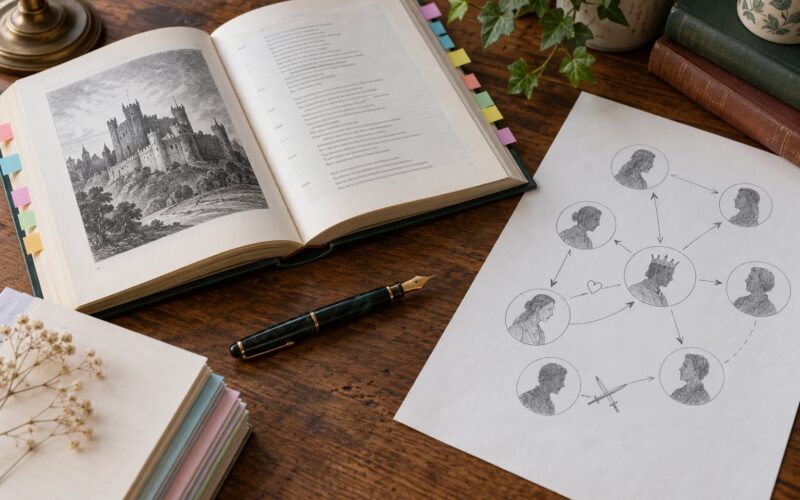
If you do one thing after reading this, learn the character map and the three strands separately. Almost every question about A Midsummer Night’s Dream, whether from a coursework prompt or an unseen extract, needs you to know which group a character belongs to and what they want at that moment. Once that is fixed in your head, the plot becomes easy to retell and the themes become easy to prove.
Then pick one theme, choose two pieces of evidence you can actually quote from memory, and write the paragraph. Not the essay, the paragraph. If you can do that one paragraph well, the longer piece writes itself, and any midsummer night’s dream study guide becomes a checklist rather than a mystery.