Bessie Coleman (January 26, 1892 to April 30, 1926) was an American aviator who became the first Black woman to hold a pilot’s license and the first African American of any gender to earn an international license from the Fédération Aéronautique Internationale. Her Bessie Coleman life and aviation firsts are tightly connected: the discrimination that closed American flight schools to her is the same force that pushed her training to France.
She did it in an era when the United States government refused to issue her a pilot’s license of its own. Her first solo flight came at Le Crotoy on the French coast, and she earned her license three months ahead of schedule.
Below is a walk through her childhood, her training, the records she actually set, and what carries her name today.
Table of Contents
- Bessie Coleman Life and Aviation Firsts at a Glance
- What Was Bessie Coleman’s Early Life Like?
- How Did Bessie Coleman Get Her Pilot Training?
- Why an international license mattered
- Bessie Coleman life and aviation firsts, explained
- What Aviation Firsts Did Bessie Coleman Achieve?
- How Bessie Coleman Life and Aviation Firsts Broke Barriers
- Why Did Bessie Coleman’s Aviation Career Face Discrimination?
- What Happened During Bessie Coleman’s Famous Flight Demonstrations?
- How Did Bessie Coleman Die, and What Was Her Legacy?
- Frequently Asked Questions
- What is Bessie Coleman best known for?
- Who was the first African American pilot?
- Did Bessie Coleman fly combat missions?
- Where did Bessie Coleman earn her pilot’s license?
- Why is Bessie Coleman’s legacy important today?
- Conclusion
Bessie Coleman Life and Aviation Firsts at a Glance
| Date | Event | Why it matters |
|---|---|---|
| 1892 | Born January 26 in Atlanta, Texas | Third of thirteen children in a sharecropper family |
| 1915 | Finishes eighth grade; attends one semester of school in Oklahoma | Her formal education stops here |
| 1916 | Moves to Chicago during the Great Migration | Works as a manicurist; brothers return from World War I |
| 1919 | Reads about aviation in the Chicago Defender | Robert S. Abbott offers financial backing |
| 1920 | Sails for France after U.S. schools refuse her | Studies French to pass the entrance exam |
| 1921 | Trains at the Caudron Brothers’ School of Aviation, Le Crotoy | First solo flight; license granted three months early |
| June 15, 1921 | Receives her international pilot’s license from the FAI | First African American of any gender to hold one |
| 1921 to 1926 | Barnstorms and performs at air shows | Refuses to perform for segregated audiences |
| April 30, 1926 | Dies after a crash in Jacksonville, Florida | She was a passenger; the mechanic was flying |
| 1929 | Bessie Coleman Aero Club founded in Chicago | Namesake clubs follow across the country |
| 1949 | Houston’s Municipal Airport renamed for her | Rare civic honor for a Black woman |
What Was Bessie Coleman’s Early Life Like?
Coleman grew up in Bell County, Texas, where her parents, George and Susan Coleman, worked as sharecroppers. She was the third of thirteen children, and the family moved between Atlanta and Waxahachie so her father could follow the cotton harvest.
Her schooling was short by any modern measure. She walked four miles to a one-room schoolhouse, finished eighth grade, and later spent a single semester at the Colored Agricultural and Normal University in Langston, Oklahoma, now Langston University. That was the end of her formal education.
Around 1916 she moved north to Chicago, part of the Great Migration that moved six million Black Southerners out of Jim Crow South. She trained as a beautician and worked in a manicurist’s chair in Bronzeville.
Her brothers came home from World War I with stories about French pilots, and a brother who served in France sometimes flew with one of them. Coleman read the aviation coverage in the Chicago Defender, the Black newspaper published by Robert S. Abbott, and decided she wanted to fly.
Then she asked. And the answer was no, over and over.
How Did Bessie Coleman Get Her Pilot Training?
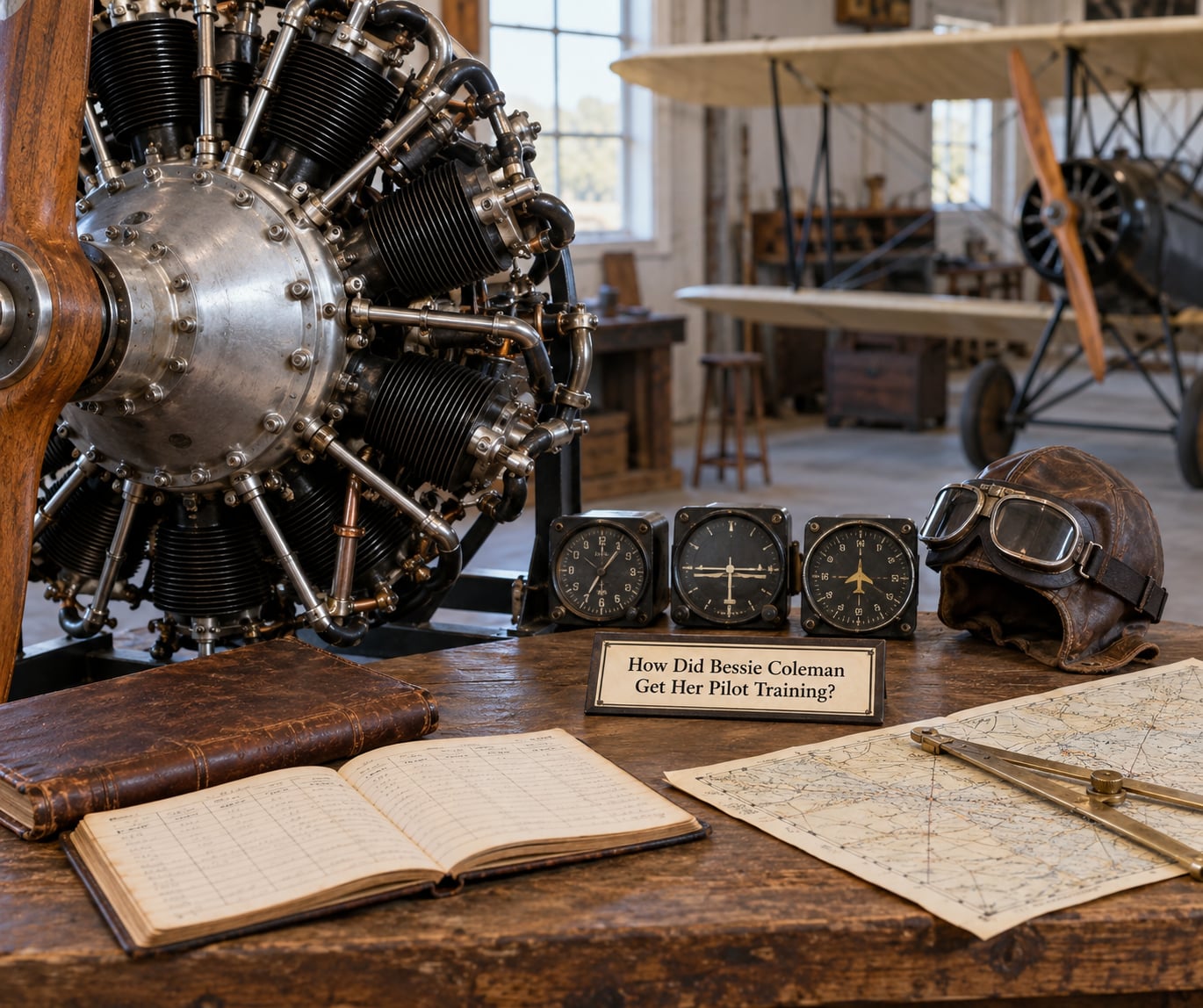
Coleman applied to American flight schools and was refused. Some schools did not admit women. The ones that did excluded Black students. No amount of persuasion changed the answer, so in 1920 she bought a steerage ticket to France.
The obstacle there was language. France would not issue her license without passing an entrance examination, so she studied French at night while working as a translator for a physician. Abbott’s Chicago Defender paid the way.
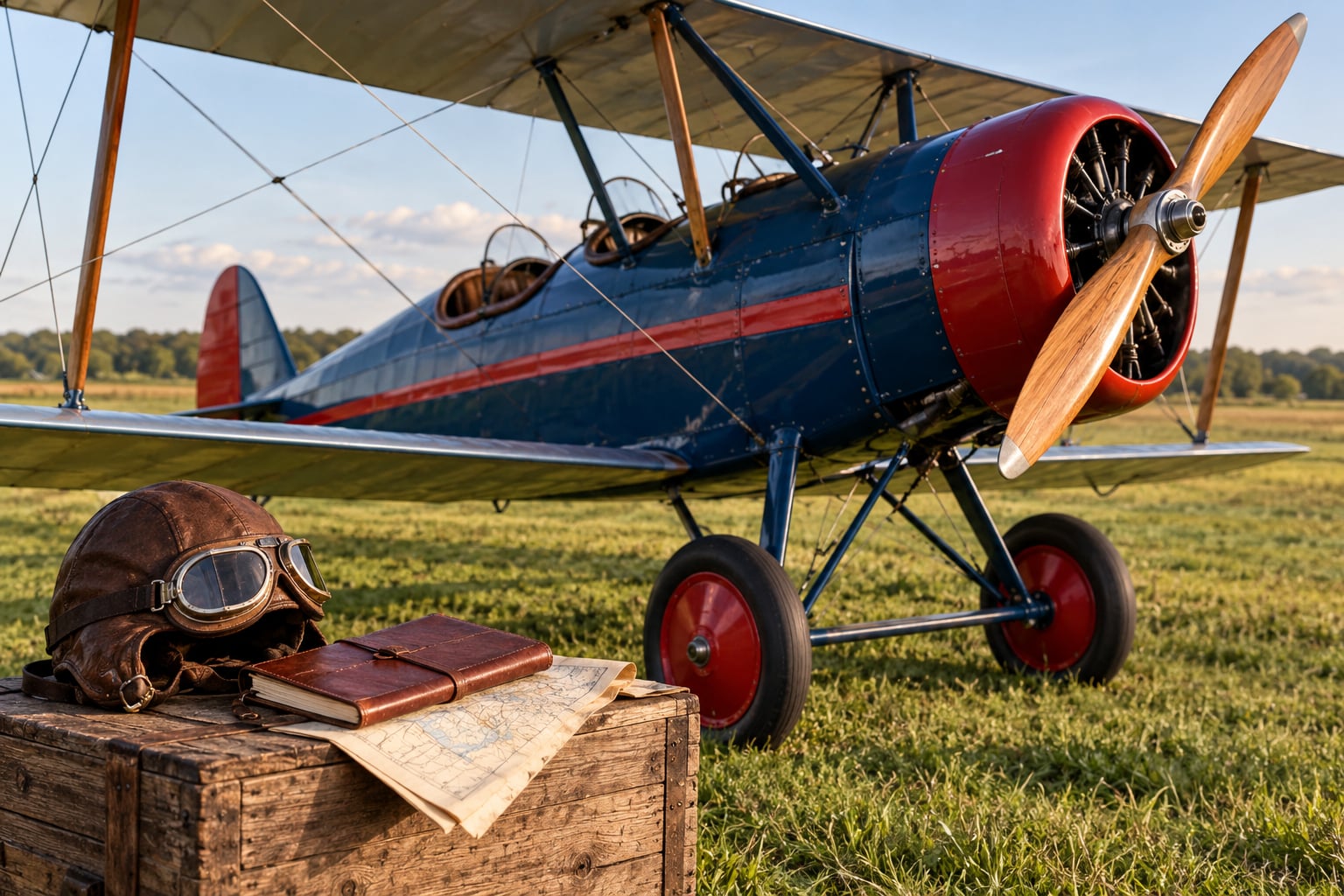
She arrived in France in June 1920 and enrolled at the Caudron Brothers’ School of Aviation at Le Crotoy, on the Somme Bay coast. She trained on Nieuport biplanes, wooden frames, wire bracing, and cloth wings, aircraft that were light, fragile, and known to be difficult to fly.
Training was not gentle. A classmate was killed in a crash, and Coleman reportedly flew on before the funeral. She finished her course in seven months and took her test three months ahead of the schedule set for her. On June 15, 1921, the Fédération Aéronautique Internationale granted her the license.
Why an international license mattered
A U.S. pilot certificate and an FAI license were different instruments. The FAI license was recognized across borders, and it came with the rating needed to fly for a passenger or cargo service anywhere that honored the Fédération. That recognition is why Coleman’s training in France counted as more than a demonstration.
Bessie Coleman life and aviation firsts, explained
Most retellings flatten her record into a single line. In truth, the firsts run along three separate lines: race, gender, and the type of license itself. Separating them is the fastest way to understand what she actually broke.
What Aviation Firsts Did Bessie Coleman Achieve?
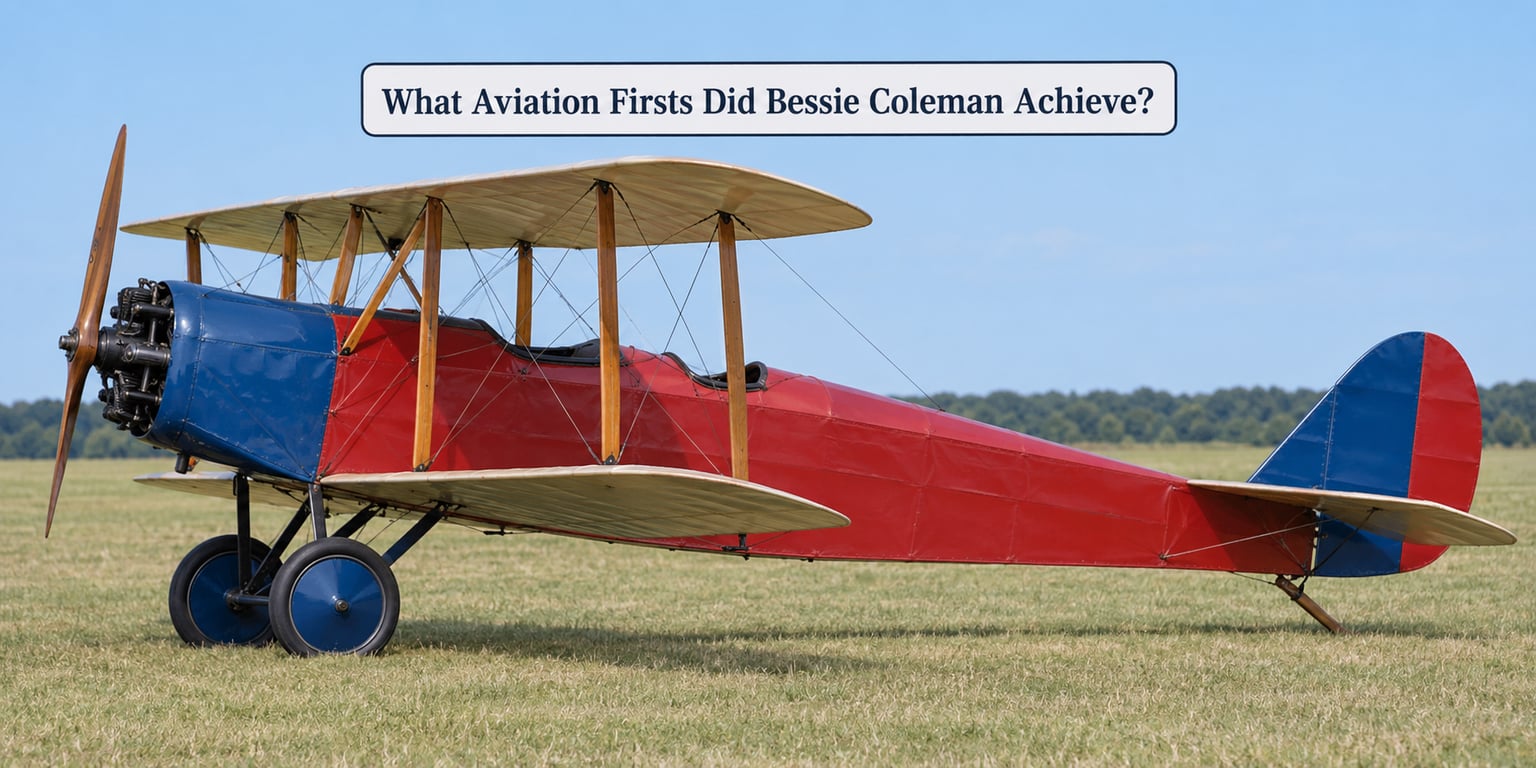
Here are her aviation firsts in order of how firmly each one is documented:
- First Black woman to earn a pilot’s license, June 15, 1921.
- First African American of any gender to earn an international pilot’s license from the Fédération Aéronautique Internationale.
- First Black woman to barnstorm professionally in the United States.
- First Black woman aviator to demonstrate aircraft in front of integrated American crowds rather than segregated ones.
- One of the first Black women to buy, own, and fly a war-surplus Curtiss JN-4 biplane of her own.
- First Black woman to be publicly described as an aviator of international standing, earning press coverage in France and the United States.
- The first person commonly cited as both African American and of known Native American descent to hold an international pilot’s license. This claim circulates widely but rests on thinner documentation than the others.
- First Black woman to refuse, on principle and in writing, to perform at segregated air shows.
- First aviator to make the flight school for Black pilots her stated public goal, spending her barnstorming earnings on that plan.
- First person to have a major Houston airport renamed in her honor, in 1949.
Two claims that show up constantly online are not hers. She was not the first Black pilot of any kind, and she was not an airline pilot. She flew exhibition and barnstorming work, never a scheduled passenger service.
How Bessie Coleman Life and Aviation Firsts Broke Barriers
The barrier Coleman broke was doubled. She was excluded as a woman and as a Black woman at the same time, in a country where both categories were legally and practically shut out of flying.
Her skill forced a change in how promoters treated her. Once French press covered her flying, American audiences came to see her specifically because she was exceptional. What happened next is the part that matters: promoters expected that novelty, and offered segregated crowds and comic framing.
Coleman’s skill also proved a narrower claim than people assume. She did not open aviation to Black pilots as a policy matter. What she demonstrated was narrower and more durable: that exclusion was a choice, and a Black woman trained to standard could beat the standards set for her.
Her advocacy outlived her. The Bessie Coleman Aero Club, founded in Chicago in 1929 by pilot William J. Powell, gave Black young people a way into flying. Namesake clubs later appeared in dozens of cities, and her great-niece Gigi Coleman has kept the story in front of new audiences through performance and nonprofit work with students of color.
Why Did Bessie Coleman’s Aviation Career Face Discrimination?
The barriers Coleman hit were structural, not personal. American flight schools in 1920 were commercial businesses operating in a segregated society, and neither the Army Air Service nor civilian authorities had an interest in licensing Black women.
There was also no federal aviation regulatory framework yet. Licensure was still largely a state and local matter, which meant a Black applicant had no federal guarantee of fair treatment to appeal to. The absence of a rule meant the discretion belonged entirely to the people running the schools.
Her public response was to reframe the argument. Promoters wanted her as an attraction. She used that attention to push for a Black flight school, and to name the exclusion out loud in the same newspapers that booked her.
What Happened During Bessie Coleman’s Famous Flight Demonstrations?
Coleman barnstormed because she had to. Flying for a living meant demonstrations, air shows, and stunt work, and she performed loops, figure eights, and rolls in open-cockpit biplanes in front of crowds that came to stare.
The Curtiss JN-4, the war-surplus “Jenny” she bought and modified herself, was well suited to that work. It was a two-seat biplane with an open cockpit, and it carried her through the standard demonstration routine of the era.
Money from those shows was earmarked for the school she wanted to build. She did not live to see it open, and she never controlled the finances of her own operation as fully as she wanted.
One more exhibition belongs in the story. During a 1923 show in Orlando, Florida, another plane collided with hers and she fell from her open cockpit, sustaining injuries that required hospitalization. She recovered, but the fractures and head injuries stayed with her.
How Did Bessie Coleman Die, and What Was Her Legacy?
On April 30, 1926, Coleman died in a Jacksonville hospital at age 34. She had been a passenger on a test flight in a Curtiss JN-6H. Her mechanic, William Wills, was at the controls.
Witnesses described a loose wrench, part of the aircraft’s structure, vibrating loose and striking the engine. Wills opened the throttle to keep the machine level, which sent it into a dive. Coleman was thrown from the open cockpit in a fall of several thousand feet.
Her remains were returned to Chicago. More than 10,000 people marched in her funeral procession, which was held at the Abyssinian Baptist Church.
Her legacy runs through names now attached to fixed things. Houston’s municipal airport carries her name since 1949. A crater on Venus bears it through the International Astronomical Union. In 1995 she appeared on a United States commemorative postage stamp.
The honors were late. That is the ordinary shape of it: recognition, when it came, arrived decades after the person who earned it was gone.
Frequently Asked Questions
What is Bessie Coleman best known for?
Bessie Coleman is best known for becoming the first Black woman to earn a pilot’s license, on June 15, 1921, and the first African American of any gender to earn an international license from the Fédération Aéronautique Internationale. She trained at the Caudron Brothers’ School of Aviation at Le Crotoy, France, after American flight schools refused to admit her. She then barnstormed across the United States and refused to perform for segregated audiences.
Who was the first African American pilot?
Bessie Coleman was the first Black woman to hold a pilot’s license and the first African American of any gender to hold an international license. Earlier Black aviators existed, including those who flew during World War I, so she is not the first Black pilot of any kind. The precise claims are hers: first Black woman licensed, and first African American to hold an FAI international license.
Did Bessie Coleman fly combat missions?
No. Coleman never flew combat missions. She flew demonstration, barnstorming, and air show work in the United States after 1921, and she trained on French Nieuports during her instruction at Le Crotoy. The aircraft she owned, a war-surplus Curtiss JN-4, had served as a military trainer during World War I, but her own flying was exhibition work, not military service.
Where did Bessie Coleman earn her pilot’s license?
Coleman earned her license in France. She studied French to pass the entrance examination, then trained at the Caudron Brothers’ School of Aviation at Le Crotoy on the Somme Bay coast. She completed her training in seven months, took her test three months ahead of schedule, and received her international license from the Fédération Aéronautique Internationale on June 15, 1921.
Why is Bessie Coleman’s legacy important today?
Coleman’s legacy matters because her record was set by overcoming exclusion rather than by any advantage, and because it proves American refusal was a choice rather than a limit. Her namesake aero clubs, the Houston airport bearing her name, and her great-niece Gigi Coleman’s work with students of color all keep aviation history from being taught as a story that stopped before her.
Conclusion
Bessie Coleman’s life and aviation firsts come down to three things held at once: real technical skill, training taken outside the country that refused her, and a refusal to accept segregated treatment in exchange for a booking.
Start with June 15, 1921, and what it actually says. She passed the FAI examination three months early, in a country that had never issued her a license of its own, as a Black woman in 1921. Read from there, everything else in the story follows.