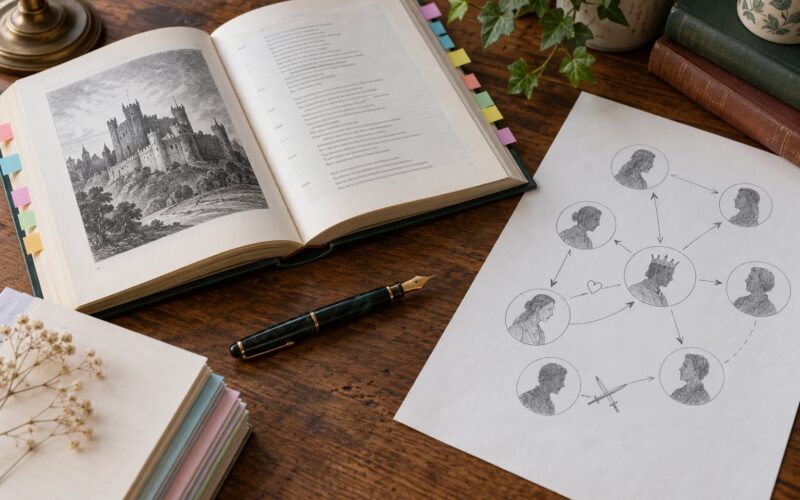
A summer reading list for high school students is any curated set of books a teen reads between June and September to keep comprehension sharp and arrive at the next grade ready for harder English work. The twelve below span classic literature, verse, memoir, science fiction and realistic fiction, and each one works as an independent pick — no ordering required.
Use this list as a menu rather than a checklist. Pick one book that scares you slightly and one that looks fun, and you will finish both.
Table of Contents
- Summer Reading List for High School Students at a Glance
- 1. To Kill a Mockingbird by Harper Lee
- 2. The Odyssey by Homer, translated by Emily Wilson
- 3. The Giver by Lois Lowry
- 4. The Secret Garden by Frances Hodgson Burnett
- 5. I Know Why the Caged Bird Sings by Maya Angelou
- 6. The Martian by Andy Weir
- 7. The Outsiders by S. E. Hinton
- 8. The Book of Unknown Americans by Cristina Henríquez
- 9. The Crossover by Kwame Alexander
- 10. Fahrenheit 451 by Ray Bradbury
- 11. The House on Mango Street by Sandra Cisneros
- 12. The Boy, the Mole, the Fox and the Horse by Charlie Mackesy
- Frequently Asked Questions
- How many books should a high school student read over the summer?
- Do high school students really need a summer reading list?
- How do I get my high schooler to read over the summer?
- What books are best for reluctant high school readers?
- Where can I find a free printable high school summer reading list?
- Conclusion
Summer Reading List for High School Students at a Glance
| Book | Genre | Difficulty | Best for |
|---|---|---|---|
| To Kill a Mockingbird | Coming-of-age, legal | Grades 9-10 | Students who like moral questions |
| The Odyssey (Wilson translation) | Epic, myth | Grades 9-11 | Readers who like adventure and monsters |
| The Giver | Dystopian | Grades 8-10 | Fast finishes and big idea talk |
| The Secret Garden | Classic, healing | Grades 7-9 | Readers drawn to quiet transformation |
| I Know Why the Caged Bird Sings | Memoir | Grades 10-12 | Writers and readers ready for harder material |
| The Martian | Science fiction | Grades 9-12 | STEM-minded problem solvers |
| The Outsiders | Realistic fiction | Grades 8-10 | Reluctant readers who want a page-turner |
| The Book of Unknown Americans | Linked short stories | Grades 10-12 | Discussion groups and essay writers |
| The Crossover | Novel in verse | Grades 7-10 | Poetry readers and athletes |
| Fahrenheit 451 | Dystopian classic | Grades 10-12 | Students ready for mature themes |
| The House on Mango Street | Vignette collection | Grades 8-11 | Readers who love language and place |
| The Boy, the Mole, the Fox and the Horse | Illustrated reflection | All grades | New readers and lighter weeks |
1. To Kill a Mockingbird by Harper Lee
Scout Finch narrates her childhood in a small Alabama town while her father defends a Black man falsely accused of a crime, and the story quietly teaches that innocence looks different depending on who is watching.
A concrete discussion example: ask students where Scout’s understanding of Boo Radley changes, and what evidence pushes it there. It is a small, concrete thread that opens a huge conversation about empathy, justice and the limits of a child’s perspective.
2. The Odyssey by Homer, translated by Emily Wilson
Odysseus spends twenty years trying to get home, and every monster, god and detour is a lesson in loyalty and storytelling craft. Wilson’s translation reads like spoken English, which makes an ancient epic feel immediate rather than homework.
Try tracking Odysseus’s disguises. Readers who notice how often he lies to get out of trouble start asking a question the whole book answers: what does a hero owe the people who trust him?
3. The Giver by Lois Lowry
Jonas lives in a community that promises safety by erasing difficulty, and he learns that a life without pain is also a life without color, music and choice.
The novel is short enough to finish in two sittings, which makes it a good summer book. Pair it with a prompt about what the community calls “correctness” and how the elders use it, because that argument still lands hard.
4. The Secret Garden by Frances Hodgson Burnett
A spoiled child moves to a gloomy English manor, finds a locked garden, and slowly becomes the person who cares for it. Readers who like character transformation tend to stay with it because the change happens in small, physical ways.
The book rewards discussion about healing and belonging without ever explaining them outright. Ask students which change in Mary is real and which is performance, and they will argue for twenty minutes.
5. I Know Why the Caged Bird Sings by Maya Angelou
Angelou’s memoir opens with her childhood in Arkansas and St. Louis and follows her into San Francisco, joining memoir, history and a voice that keeps reshaping itself.
This is the right pick for readers ready for resilience, identity and family under pressure. Pair it with historical context on the Jim Crow South so the book lands as both a personal story and a record of an era.
6. The Martian by Andy Weir
Astronaut Mark Watney is left alone on Mars and solves one problem after another with whatever science he remembers, narrated in a voice that is funny, precise and endlessly practical.
Hand a reader a notebook and ask them to track his food, water and oxygen math as it happens. Students who like STEM see the book differently once they are keeping score alongside him.
7. The Outsiders by S. E. Hinton

Ponyboy narrates a night of violence between the poor Greasers and the rich Socs, and the last line reframes the whole book as a plea to look past the labels.
It is compact, tense and readable aloud, which makes it the most reliable reluctant-reader entry on this list. Ask students which character they would defend in a debate, then push them to name what each side of the conflict is actually afraid of.
8. The Book of Unknown Americans by Cristina Henríquez
Henríquez links short stories about immigrants and their children across the United States, and each one lands on an ordinary moment rather than a headline.
For a book club, this one gives everyone something to hold. Ask each reader to bring a story about a grandparent or neighbor, and the migration themes turn personal without anyone having to argue for a thesis.
9. The Crossover by Kwame Alexander
Twins Josh and Jordan play basketball together and then have to figure out who they are apart, told in verse that moves like play and hurts like a bruise.
Students who claim they do not read poetry often finish this one, because the form hides less than it sounds. Ask them to find three lines where the line break changes the meaning, and the analysis writes itself.
10. Fahrenheit 451 by Ray Bradbury
Fireman Montag burns books for a living and slowly becomes a man who reads, and Bradbury uses that reversal to ask what happens when a culture decides comfort matters more than argument.
Flag the mature themes — violence, suicide, graphic imagery — before a student starts. The payoff is a book that connects directly to book bans, screen habits and any current news story about censorship.
11. The House on Mango Street by Sandra Cisneros
Cisneros builds a portrait of a Chicago neighborhood out of short, sharp episodes, and the accumulation is stronger than any single scene.
Read a handful of vignettes aloud and let the repetition of the names do the teaching. Ask students which detail tells them most about a character with no explanation attached, which is usually the whole lesson on close reading.
12. The Boy, the Mole, the Fox and the Horse by Charlie Mackesy
Mackesy’s illustrated conversations between a boy and a handful of animals cover grief, kindness and the awkward business of asking for help, in pages that take ten minutes each.
It is the easiest entry here and the one students hand to friends. A good follow-up question: which line did you write down, and why did that one stay with you?
Frequently Asked Questions
How many books should a high school student read over the summer?
Most guidance lands between three and six books for the whole summer, and the number matters less than finishing. A short classic, one longer novel and one nonfiction or memoir title is a realistic target that still builds reading stamina. Set a page goal instead of a book count if your student stalls, since a daily habit reads faster than a deadline.
Do high school students really need a summer reading list?
Not in the formal sense. A list works best as a curated menu of options the student picks from, rather than a set of assignments. Teachers and parents say choice-based lists of eight to ten titles produce far more reading than a single assigned book, because the student already owns the decision. Keep the list short, keep it optional in tone, and keep a few titles that look genuinely fun.
How do I get my high schooler to read over the summer?
Lower the stakes first. Offer audiobooks and library ebooks alongside print, since a student who finishes a book while walking or driving has still read it. Let them choose between two titles rather than all twelve. Talk about a plot twist once and then stop. And skip the lecture about how reading supports college essays, which every student has heard and most have learned to ignore.
What books are best for reluctant high school readers?
Start with short, high-stakes narratives: The Outsiders, The Giver and The Boy, the Mole, the Fox and the Horse all finish in a few sessions and move quickly. Graphic novels, sports stories and science fiction with a working problem at the center also hold reluctant readers better than reflective classics. If a book stalls by chapter five, let the student abandon it and pick again without a lecture.
Where can I find a free printable high school summer reading list?
Your public library is the first stop, and cardholders usually get free ebooks and audiobooks through apps like Libby and Hoopla with no extra cost. School librarians and English teachers often publish free PDFs, and the American Library Association and YALSA publish annual lists by grade. Check with the school first, since required summer reading often differs from what any general list recommends.
Conclusion
This summer reading list for high school students runs from a 1930 courtroom novel to an illustrated conversation between a boy and a fox, which is roughly the range of what a teenager will actually read in a summer. Start with one title that interests you and one that stretches you, set a modest goal such as twelve pages a day, and keep a page or two of notes beside you as you go.