
The best plays to read aloud in an English class are short, dialogue-heavy texts with a manageable number of speaking roles, so every student can hold a character within a single period and the language itself carries the discussion. Most of the twelve below run about thirty to ninety minutes as a class read, and all are usable as a focused scene rather than a full performance.
That last part matters more than most lists admit. A class of thirty-two does not need Macbeth performed; it needs forty minutes of Macbeth heard well. What follows names a recommended excerpt or approach for each play, roughly how many readers you need, and where the casting gets tight.
Table of Contents
- Plays to Read Aloud in an English Class at a Glance
- How to choose plays to read aloud in an English class by grade band
- How to run a class read-aloud in one period
- Where to find free scripts to read aloud
- 1. The Tempest by William Shakespeare
- 2. A Doll’s House by Henrik Ibsen
- 3. The Importance of Being Earnest by Oscar Wilde
- 4. Our Town by Thornton Wilder
- 5. Fences by August Wilson
- 6. The Glass Menagerie by Tennessee Williams
- 7. The Crucible by Arthur Miller
- 8. The Miracle Worker by William Gibson
- 9. The Odd Couple by Neil Simon
- 10. A Raisin in the Sun by Lorraine Hansberry
- 11. The Wolves by Sarah Ruhl
- 12. The Effect by Emily Zayas
- Frequently Asked Questions
- What are the best plays to read aloud in an English class?
- Which Shakespeare plays are easiest to read aloud to high school students?
- Should teachers read a play in full or choose specific scenes?
- How can a class perform a play without memorizing every line?
- How much time should teachers spend preparing a class to read aloud?
- How do you discuss sensitive themes without making students uncomfortable?
- Conclusion
Plays to Read Aloud in an English Class at a Glance
| Play | Playwright | Length | Speaking roles | Grade band | Why it reads aloud |
|---|---|---|---|---|---|
| The Tempest | Shakespeare | Two scenes: about 25 min | 6-10 | 9-12 | Storm, magic and clear old-English vocabulary |
| A Doll’s House | Ibsen | One act: about 60 min | 5-6 | 10-12 | Small cast, one turning point, sharp ending |
| The Importance of Being Earnest | Wilde | Act I and III: about 55 min | 5-6 | 9-12 | Brisk comic dialogue and verbal irony |
| Our Town | Wilder | Acts I-II: about 50 min | 12-20 | 9-12 | Natural speech and a large ensemble |
| Fences | Wilson | Act I: about 50 min | 4-5 | 10-12 | Repetition and pause carry the subtext |
| The Glass Menagerie | Williams | Scene six: about 35 min | 4-6 | 10-12 | Lyric stage directions and memory-play framing |
| The Crucible | Miller | Act III: about 45 min | 10-15 | 10-12 | Interruption and accusation at full volume |
| The Miracle Worker | Gibson | Scenes one and six: about 40 min | 5-6 | 8-12 | Physical action reads even before meaning lands |
| The Odd Couple | Simon | Act I: about 45 min | 5-7 | 9-12 | Fast farce that shows timing and status |
| A Raisin in the Sun | Hansberry | Act I: about 45 min | 5-6 | 9-12 | Direct dialogue and competing ambitions |
| The Wolves | Ruhl | One scene: about 30 min | 3-5 | 11-12 | Overlapping voices and deliberate ambiguity |
| The Effect | Zayas | Act I: about 40 min | 2-4 | 11-12 | Two-hander that turns on shifting alliances |
Role counts are approximate and assume a few students doubling small parts. A first-year Shakespeare class can stretch most of these across twenty-eight readers; a two-hander is a problem, not a limitation, in a large room.
How to choose plays to read aloud in an English class by grade band
For grades 6-8, pick comedy, clear stakes and a cast under ten. Our Town and The Tempest open more easily than anything with a long prologue, and The Miracle Worker works below grade level because students follow the action before they follow the argument.
For grades 9-12, the canon gets richer: A Doll’s House, The Crucible, A Raisin in the Sun and Fences all reward close reading and discussion. Contemporary work such as The Wolves and The Effect suits older students who already know the nineteenth- and twentieth-century canon and are tired of it.
How to run a class read-aloud in one period
Assign one character per student before class and mark the pages where each role begins and ends, using the Folger Shakespeare Library method as the model: students read in text order, each reader owning roughly a page before handing off. Students who struggle with long speeches get the comic or comic-relief lines first, and everyone else takes the sustained monologue.
Teachers on school theatre forums keep asking about the same two mechanics: how to track whose turn it is, and how to pace forty minutes. The answer is a printed line map on the board and a hard stop before the discussion eats the period. One teacher running a Macbeth scene this way reported next-day quiz scores in the low nineties, against a much weaker result for a class that only listened to a recording, which is the argument for students reading over students watching.
Where to find free scripts to read aloud
Shakespeare, Ibsen, Wilde, Wilder and Gilman are public domain, and the Folger Shakespeare Library and Project Gutenberg both host complete, classroom-ready texts. Modern work is different: Fences, The Crucible, A Raisin in the Sun, The Odd Couple, The Glass Menagerie, The Wolves and The Effect are under copyright, so reading them aloud in class is fine but copying scripts for students usually needs a license from the publisher or a school-distribution arrangement.
1. The Tempest by William Shakespeare
This is the friendliest door into Shakespeare because the plot runs on storms, spells and two people who mistake each other for a monster and a lady. The language is plainer here than in most of the canon, and a class can hold the whole story in about three pages of text.
Start with the shipwreck in Act I, scene two, where the passengers stagger on stage describing what almost happened to them. The overlapping panic reads well out loud because students have to listen past each other to catch it, which is the listening habit the whole unit is trying to build.
For the discussion, the Prospero-Caliban confrontation in Act I or the Ariel scene in Act III gives you a real argument about power and forgiveness. Reading the full play in one go is a stretch; most classes take three or four sessions, and casting has to be planned before you print the roles.
2. A Doll’s House by Henrik Ibsen
Five speaking roles and a single reversal at the end make this the neatest read-aloud on the list. Nora’s secret loan gives you marriage, money and independence in one container, and the closing door sounds different when thirty students have watched it build.
The ending is the obvious excerpt, and it holds up. If you want comedy first, use the early scenes where Nora calls Torvald skylark and squirrel and the two of them argue cheerfully over who deserves to spend money, which is a gentler way in before the play turns.
Two cautions. The loan revelation sits on financial abuse, so check your students’ circumstances before you read it cold, and give younger groups the comedy scenes before the last act rather than the reverse.
3. The Importance of Being Earnest by Oscar Wilde
Nobody has to work hard to follow this one, which makes it the safest comedy in English. The lines are short, the situations are absurd, and every character is lying about something, so students can track the plot without ever naming the satire.
Read the bunburying scene in Act I, where Jack invents a sick friend named Bunbury to get out of engagements. Then move to the confrontation in Act III, when Gwendolen and Cecily discover they have been engaged to the same man, and let the class hear how Wilde makes a character reveal values through phrasing rather than confession.
The difficulty is not comprehension but pace. Oscar and Jack talk at the same speed all evening, so give readers permission to lean into the rhythm and stop rushing toward the joke.
4. Our Town by Thornton Wilder
The premise is deliberately small: a town, a marriage, a death. That plainness is why it works, because the dialogue sounds like people talking instead of performing, and the Stage Manager’s comments come across as deadpan rather than literary.
The wedding in Act II gives you George and Emily failing to be impressed with each other, which is funny and honest in a way students recognise. The cemetery scene that follows is the famous set piece, and it lands harder when they have just heard the wedding.
Some philosophical material about death suits older students better than younger ones, and the second act’s sparsity means you may need to narrate the missing years. Both are manageable; neither is a reason to cut the play.
5. Fences by August Wilson
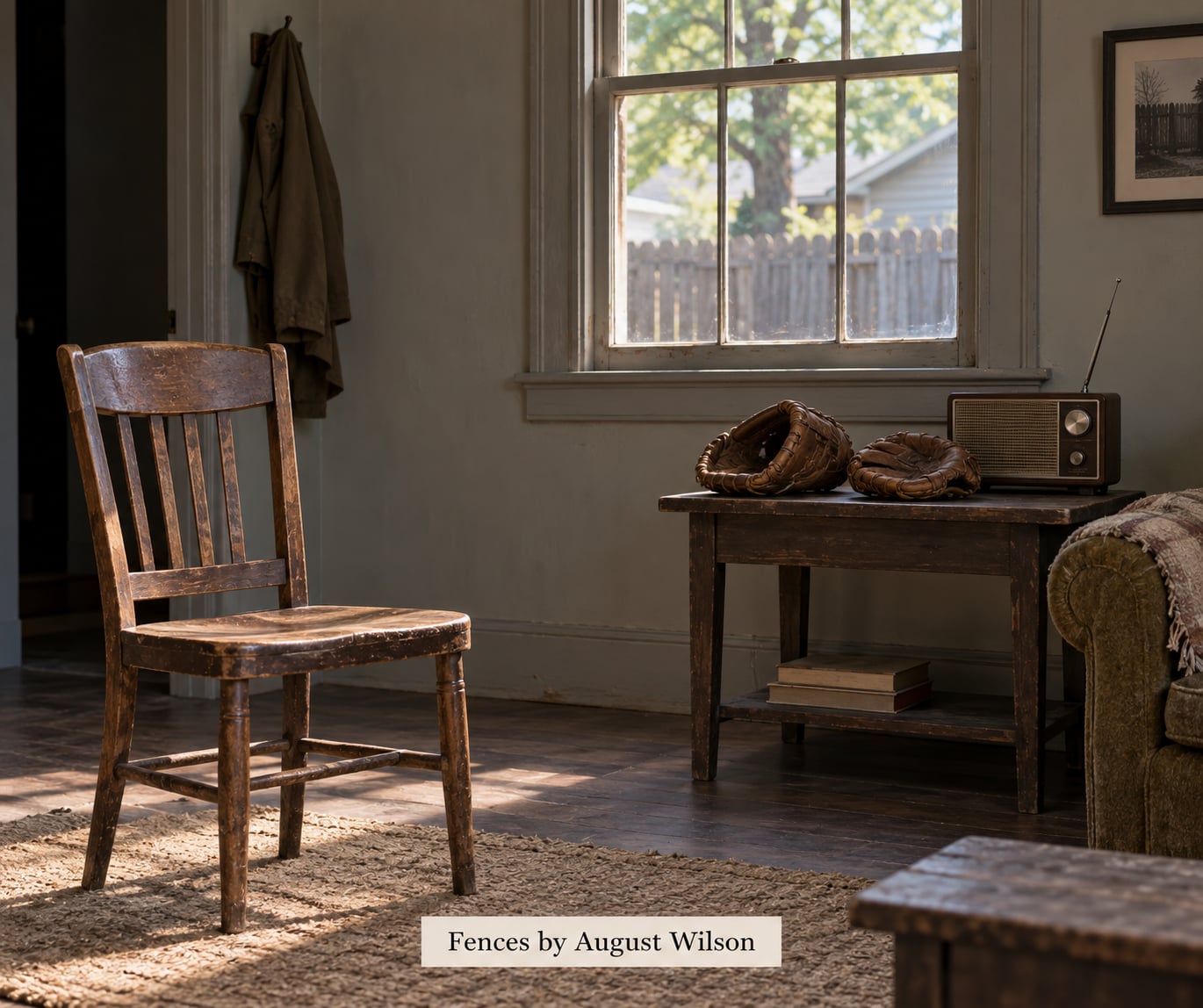
This play is mostly two men talking, and it works because Wilson builds pressure out of repetition and pause. Troy’s lines come back in slightly altered forms, so listening carefully is not optional; it is the whole assignment.
Begin with the opening exchange between Troy and Bono, where a nine-year-old conversation about a razor blade becomes an argument about money, dignity and a man’s right to build things. The Rose scene later in Act I, when Troy admits he was afraid of his wife, is the subtext lesson.
Plan for context. The play treats race, work, family and masculinity directly, and students without that framing tend to hear hostility where Wilson wrote pride and injury. Ten minutes of background on the play’s decade and setting changes how the whole room listens.
6. The Glass Menagerie by Tennessee Williams
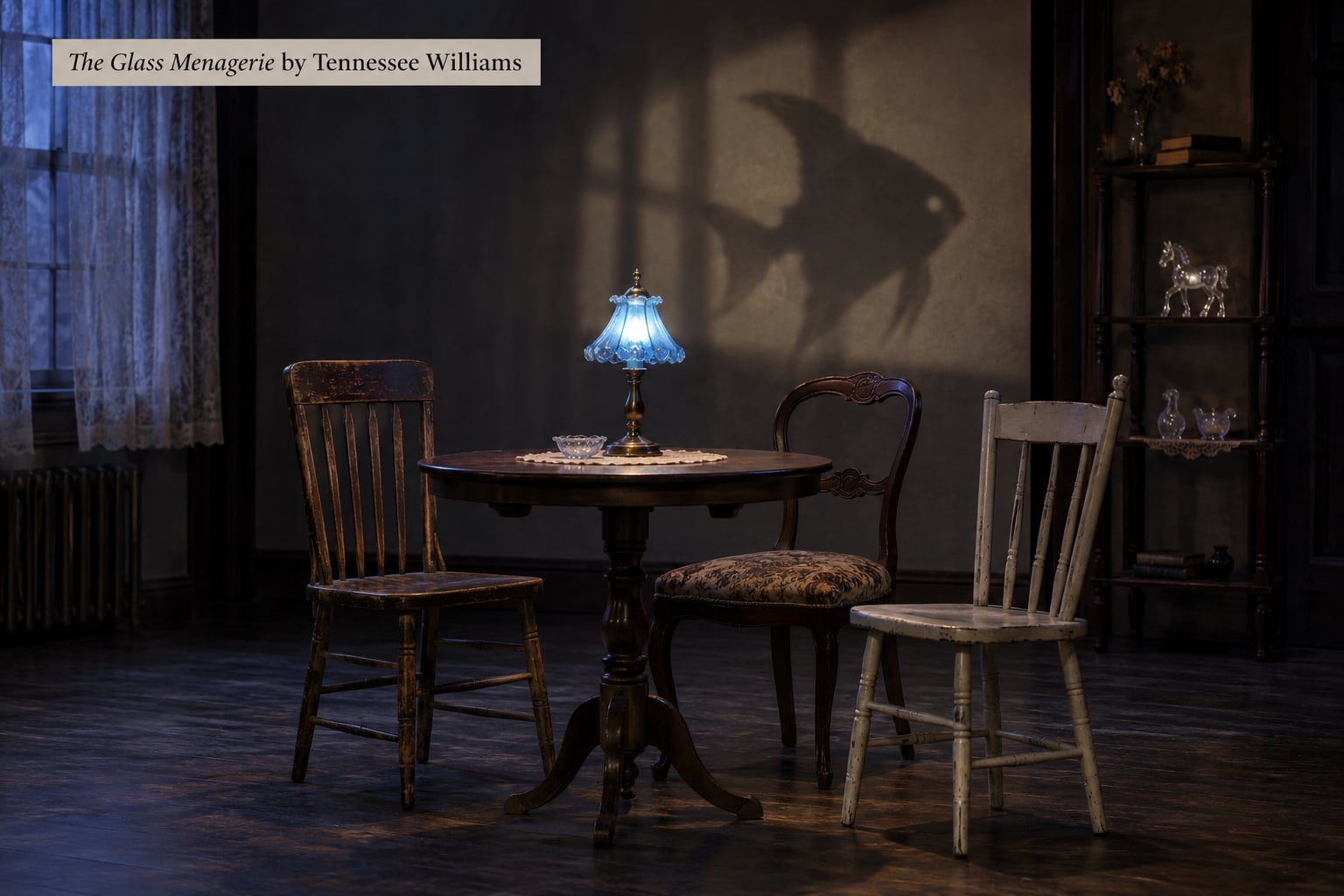
Williams wrote this as a memory play, and he tells you so in the first lines, so students know from the start that the events are filtered through Tom’s memory. That licence makes the heavy lyricism easier to accept.
The scene worth reading is the dinner in scene six, where Amanda, Laura and the gentleman caller talk past each other and the candle burns down through the whole scene. It shows subtext without anyone lying outright, which is the clearest demonstration of subtext in most school curricula.
The stage directions are part of the text here, not furniture. Have the class read a few aloud, because they carry the emotion that the dialogue holds back. Balance matters too: the lyric passages need unhurried readers, and the scenes shift quickly.
7. The Crucible by Arthur Miller
Interruption is the technique. Characters talk over each other, accuse in front of witnesses and ask questions designed to trap rather than learn, so the room ends up feeling like a courtroom whether you wanted one or not.
The courtroom material in Act III, with Proctor facing Hale and Putnam while Hale examines him, is the strongest choice. Proctor’s crisis of conscience, where he finally says what he saw, gives you the discussion about integrity the play is built around.
Two practical notes: the language is coarse in the trial scenes, and the historical context of the Salem trials is not optional background. Ten minutes on the actual records before the read pays for itself immediately.
8. The Miracle Worker by William Gibson
Ellen Terrin’s shouting, repetition and refusal to hand over the water pump reads as conflict before students understand a word of it, which makes this the most accessible entry point on the list. Several readers in a group can carry the physical energy.
Use the pump scene in scene one, where Annie Sullivan works against time at the well house, and the spelling lesson that follows. Students watch a method being invented in front of them and can analyse it afterward.
Handle the disability, communication and privilege questions directly rather than leaving them to implication. Students often begin by treating Annie as a saint and Helen as an object, and the discussion is more useful than the sanitised version.
9. The Odd Couple by Neil Simon
Two men, one tidy and one chaotic, and a fight about domestic space that runs the whole play. Simon’s timing is generous, so student readers who hesitate actually sound like characters hesitating rather than students hesitating.
The poker game in Act I is the cleanest excerpt, because Oscar’s phone habits and Felix’s neatness collide in one room with a table between them. The reconciliation attempt in Act II shows two styles of apology and works well as a follow-up read.
The original text carries dated language and period stereotypes that most teachers now mark or cut, and you should decide in advance how you will handle them rather than improvising in front of the class. Comedy value stays intact once the handling is decided.
10. A Raisin in the Sun by Lorraine Hansberry
Five speaking roles, plain contemporary language and a family whose ambitions all point in different directions. Nobody speaks in verse, so students can focus on argument rather than decoding.
The kitchen confrontation between Walter and Beneata in Act I, where the check from his father’s insurance policy sits on the table between them, is the scene to read. So is the insurance office sequence later, where Walter discovers what Lindner has offered, and the closing family discussion that follows.
Hansberry wrote the play with housing segregation and racism in plain view, and students need that history to read Walter’s choices correctly. The Younger family also offers a rare ensemble of women with authority, which makes Act II worth reading even if time is short.
11. The Wolves by Sarah Ruhl
A contemporary play where two voices talk over each other, the stage direction is part of the meaning, and nobody tells you plainly what just happened. Students who like their drama clean will complain; students who like being made to work tend to remember it.
Read one defined scene, not the whole script. Fixing the cast to three or four readers with clear positions in the room is the difference between the overlapping structure sounding deliberate and sounding chaotic.
The play asks about how Americans have treated wolves and each other, and the repeated phrasing between the two main figures needs a second pass to click. Budget for rereading one scene; that is where the ambiguity resolves.
12. The Effect by Emily Zayas
A two-hander built around a question rather than a plot twist: what happens when a drug trial requires a healthy volunteer to live with a woman caring for her husband’s dementia-stricken mother. The relationship between the volunteer and the carer changes under pressure, and that change is the play.
Read the opening movement, where the arrangement is explained and the rules are set, then let the class predict where the alliance sits by the end. Then read the later movement and check the predictions against what actually happened.
This one needs advance notice. The play deals with dementia, illness and intimacy between two people who met by circumstance, and some students will have family experience of the first two. Tell them what is coming before the read, not during it.
Frequently Asked Questions
What are the best plays to read aloud in an English class?
The best picks are dialogue-heavy texts with small casts and clear scene breaks: The Tempest, A Doll’s House, The Importance of Being Earnest, Our Town, Fences, The Crucible, A Raisin in the Sun and The Miracle Worker. Choose one whose speaking roles you can fill with your class size, and read a single act or scene rather than the full text.
Which Shakespeare plays are easiest to read aloud to high school students?
The Tempest is usually the easiest because its language is plainer and its plot turns on a storm, a spell and a reconciliation. Much Ado About Nothing and The Taming of the Shrew also work well, since the plots are carried by fast comic dialogue. Macbeth and Hamlet reward more advanced readers, and Hamlet’s long speeches can stall a first read.
Should teachers read a play in full or choose specific scenes?
Choose scenes for a single period and reserve the full text for a longer unit. Reading two or three connected scenes gives students a complete arc, a turning point and something to discuss, while a full performance-length read usually leaves no time for analysis. Assign the rest as written homework so nobody skips ahead.
How can a class perform a play without memorizing every line?
Use reader’s theatre. Students hold scripts and read their own lines in text order, with no blocking, costumes or memorised speeches, following the Folger Shakespeare Library method of one character per page. Assign parts a day ahead, mark where each role starts and stops, and give students who struggle with long speeches the comic lines first.
How much time should teachers spend preparing a class to read aloud?
Budget roughly thirty minutes to an hour for a single scene: fifteen to twenty minutes to assign and mark roles, and the rest to write two or three discussion questions and prepare any context. Longer units with several scenes take proportionally more. The read itself usually needs 35 to 45 minutes of a class period, leaving time for talk afterward.
How do you discuss sensitive themes without making students uncomfortable?
Name the material before the read rather than during it, tell students which plays touch death, illness, racism or domestic abuse, and let anyone pass on a question without explanation. Keep the discussion text-first: ask what a character does and says before asking what they feel. Students who have lived something often need a way to step back, so offer a written alternative.
Conclusion
Pick one play from this list based on grade level, theme and how many readers you have, then rehearse a single complete scene yourself before you assign anything. If the scene works when you read it aloud in an empty room, it will work with a full class.
Once the read is done, ask two questions: what did the character want, and what did the language reveal that the character did not say. That pairing is why reading plays aloud beats listening to one, and it is the whole reason to choose plays to read aloud in an English class rather than assigning them silently.