Conflict in a story is the opposition that stands between a character and what they want: another person, a force, a situation, or the character’s own doubts and competing values. If you want to know how to create conflict in a story, give your protagonist one specific goal, put a credible obstacle in the path of that goal, and make sure failure costs them something they cannot afford to lose. Everything else is detail.
That sounds simple, and mostly it is. The trouble writers hit is not understanding the formula but applying it to a draft they have already fallen in love with. A character you like, a world you built carefully, a premise you are proud of, and then nothing happens to any of it.
The fix is rarely a new idea. It is usually a sharper goal, a stronger opponent, or higher stakes, applied at the level of a single scene. This guide walks through both the setup work and the scene-level craft, and it works for novels, short stories, and classroom fiction assignments alike.
Table of Contents
- What You Need
- A protagonist with one specific goal
- An opposing force with a motive
- Stakes the protagonist would actually fight for
- A setting with built-in pressure
- Step-by-Step: How to Create Conflict in a Story
- 1. Define the protagonist’s goal
- 2. Introduce an opposing force
- 3. Raise the stakes
- 4. Create resistance and escalation
- 5. Force difficult choices
- 6. Build pressure through scenes
- 7. Resolve the central conflict
- Common Mistakes
- The conflict could be solved in one conversation
- Nothing is at stake
- The antagonist is passive or stupid
- The same obstacle keeps returning with no escalation
- Characters argue but nothing changes
- The character behaves out of character to serve the plot
- Bonus: tension mistaken for conflict
- Frequently Asked Questions
- What is conflict in a story?
- What are the main types of conflict in literature?
- How do I create conflict between two characters?
- How much conflict does a story need?
- How can I make a plot more dramatic?
- Can you write a story without a conflict?
- Conclusion
What You Need
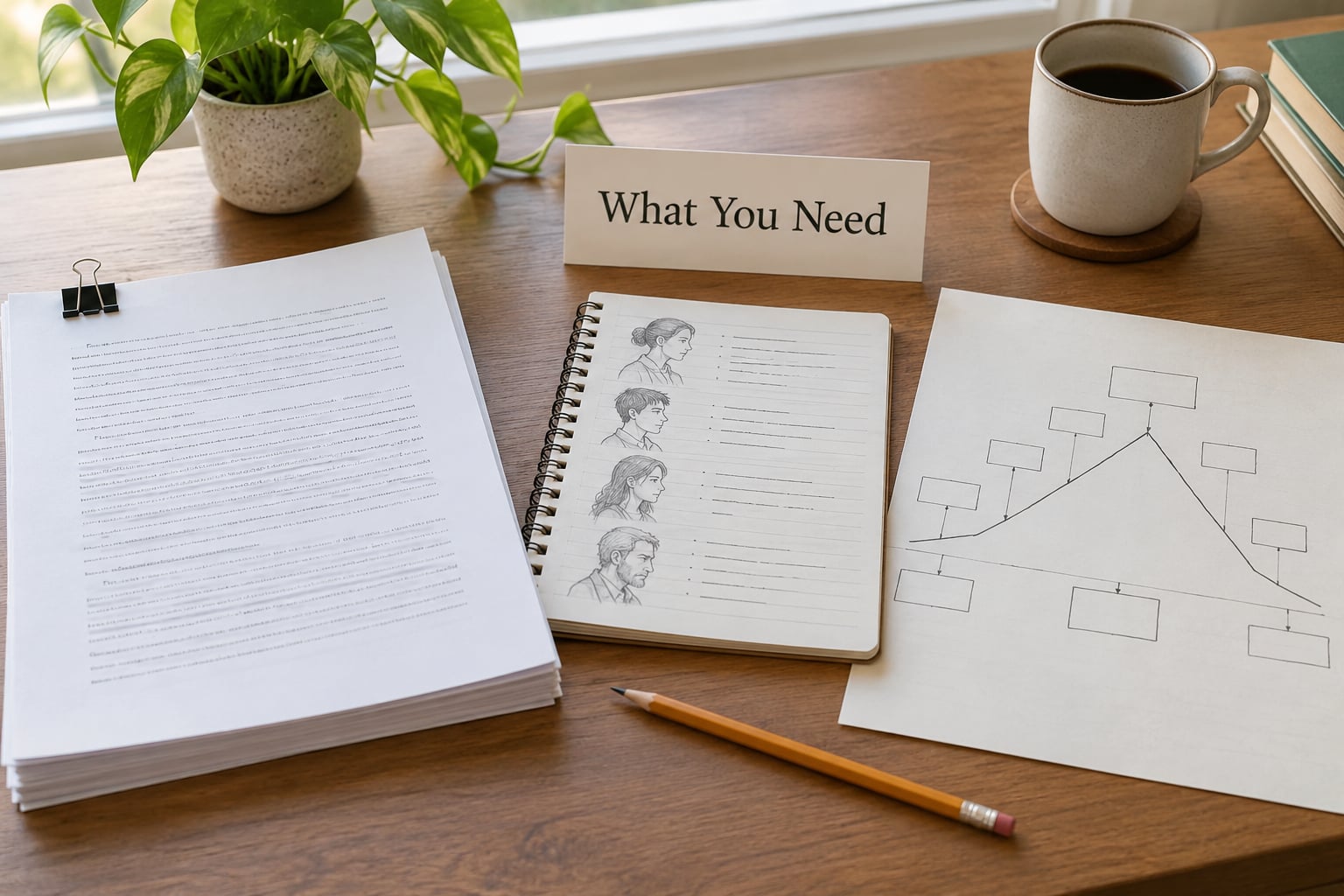
Before you write a single line of arguing dialogue, four things need to exist on paper. Miss one and the conflict will sag no matter how many scenes you stack on top of it.
A protagonist with one specific goal
The goal has to be an action, not a mood. “Be a better person” cannot be blocked in a scene. “Get her father’s signature on the release form before the bank closes at four” can be blocked, delayed, stolen, or made more expensive.
Useful test: if your protagonist’s objective could be finished in a sentence, write a more expensive version of it. Get the signature before four. Convince her brother she is not a liar before the wedding on Saturday. Reach the far shore before the tide turns.
An opposing force with a motive
An obstacle is not a villain. It is a person, institution, condition, or inner pattern with a reason for being in the way. Give it a want of its own, and the plot starts generating scenes on its own.
A guard who blocks a door because he was fired last week and is scared of losing his pension is a force. A guard who blocks a door because he is evil and hates the protagonist is a placeholder. The first one can improvise. The second one can only stand still until the hero solves something else.
Stakes the protagonist would actually fight for
Stakes are the things your character values, ranked. Money is common. So are safety, reputation, belonging, a relationship, an identity, a chance at a future, or the version of themselves they respect.
The most reliable stakes are the ones that hurt in two directions at once. Failing to get the medicine means the sick sibling suffers, and it also means admitting to a family that promised she had a plan. One loss, two wounds.
A setting with built-in pressure
Some places generate conflict for free. A courtroom during testimony, a kitchen at three in the morning after a funeral, a border crossing at closing, a hospital waiting room, a school reunion.
Ask what your setting forbids, delays, or punishes. Any of those three becomes an obstacle that never needs to sleep or scheme.
Step-by-Step: How to Create Conflict in a Story
1. Define the protagonist’s goal
Write the goal in one sentence, in the protagonist’s own words, with a deadline attached. “I will find out who set the fire and stop them before the insurance investigator arrives Thursday morning.”
The deadline matters more than most writers expect. Without one, every scene has the same vague quality of things continuing. With one, scenes either move the clock forward or the reader feels the slipping.
Then write what the protagonist believes will get them there. That belief is usually wrong in some way, and the gap between what they believe and what is true is where your first act lives.
2. Introduce an opposing force
This is the heart of how to create conflict in a story. Take your protagonist’s goal and find the thing standing directly in the path of it.
The classic categories, grouped by who or what the protagonist faces, are character vs character, character vs self, character vs society, character vs nature, character vs technology, and character vs supernatural. Most strong novels run two of these at once and let them feed each other.
| Type of conflict | Typical opponent | What it costs when it fails | Where it works best |
|---|---|---|---|
| Character vs character | A rival, an antagonist, a family member, a former friend | Position, relationship, safety, someone else’s life | Thrillers, romance, courtroom stories, family sagas |
| Character vs self | Doubt, guilt, addiction, fear, a belief that turns out to be false | Self-respect, the ability to trust their own judgment | Literary fiction, coming-of-age, sequels |
| Character vs society | Custom, law, class, an institution, a majority that is wrong | Standing, family security, physical safety | Historical fiction, dystopian, small-town dramas |
| Character vs nature | Weather, terrain, illness, distance, exhaustion, an animal | Time, supplies, physical ability, hope | Survival stories, wilderness narratives, disaster fiction |
| Character vs technology | A system, a corporation, surveillance, a machine, an algorithm | Privacy, employment, identity, autonomy | Near-future and speculative fiction |
| Character vs supernatural | A ghost, a curse, a god, a spirit, something with no human logic | Soul, sanity, memory, the rules of the world itself | Gothic, horror, mythic retellings |
Once you have picked a type, engineer an uneven matchup. The protagonist should have something the opponent has more of: money, numbers, authority, patience, information, or the willingness to lose. That imbalance is friction, and friction is plot.
Give the opponent one rule they will never cross. A character with a fixed limit is easy to write, because the reader learns to predict the boundary and dread it.
3. Raise the stakes
Stakes should climb in steps that feel earned. The move most beginners make is jumping from comfortable to catastrophic, and readers feel the stitch.
A workable ladder looks like this: a setback that costs time, then a setback that costs money or comfort, then one that costs a relationship or an option, then one that costs the goal itself, then one that costs the character something they cannot get back.
Another approach is to let the protagonist win a fight and pay for it anyway. They get the document, and they have to sign a name that will haunt them. Victory with an invoice attached raises stakes without adding a new villain.
4. Create resistance and escalation
Obstacles should get more complicated, more costly, or more urgent, and every one of them should come from something already in the story. Escalation that arrives from outside feels like the author cheating.
Ask three questions when you feel stuck in the middle: what would the opponent do next, what does the obvious plan cost, and what would happen if the obvious plan simply failed? That last question is the most reliable one I know. Break the protagonist’s plan and the story hands you the next beat.
Escalation has a ceiling, and exceeding it produces melodrama. If every chapter ends with a scream, a punch, and a fire, the reader starts predicting you. Better to let something small and quiet go wrong: a friendship that goes unreciprocated, a door left unlocked, a promise made in anger.
5. Force difficult choices
Conflict starts to matter when the protagonist cannot have everything they want at once. Present two goals that both matter and only one of them can be served.
The surgeon who must choose which patient to treat first. The witness who can protect a friend only by telling the truth. The inheritor who must sell the farm or move away from a parent who is failing.
These are the moments readers remember, because a choice tells them who a character is without any explanation. A character who always chooses correctly is hard to believe. A character who chooses courage and lives with the cost is not.
6. Build pressure through scenes
Conflict at the story level is not the same as conflict in a scene. A novel can have a central struggle and still contain scenes where nothing is at stake, and those scenes are where readers fall out.
Inside a single scene, pressure comes from a small number of reliable tools.
- A clock. Something expires during the scene, usually soon.
- Incomplete information. One character knows something the other does not, and the reader knows too.
- A repeated attempt that fails differently. Three tries at the same door is drama; one try is an obstacle.
- Setting pressure. Cold, dark, public, crowded, exhausted. The room pushes on the characters.
- Dialogue with a withheld card. Each character is holding back something, so every line has a shadow.
End a scene on the worst possible moment that still follows from what happened, not on a convenient interruption. The phone ringing in the middle of a confession wastes the confession. The confession landing exactly as someone walks in keeps it.
Long fiction has a specific version of this problem. Past roughly the middle, writers run out of conflict supply and start repeating the same obstacle with a new face. The repair is usually to go inward: let the external obstacle stay exactly as it is while the protagonist’s internal conflict gets worse, because now what they know changes what the obstacle means.
7. Resolve the central conflict
A resolution should answer the central struggle, reflect the protagonist’s choices, and leave something visibly changed. Three outcomes do most of the work: the protagonist gets what they wanted and pays for it, they get what they needed instead of what they wanted, or they fail and rebuild around the loss.
Avoid endings that resolve because the problem simply leaves. If the antagonist walks away in the last chapter, readers feel cheated, and they are right to.
Common Mistakes
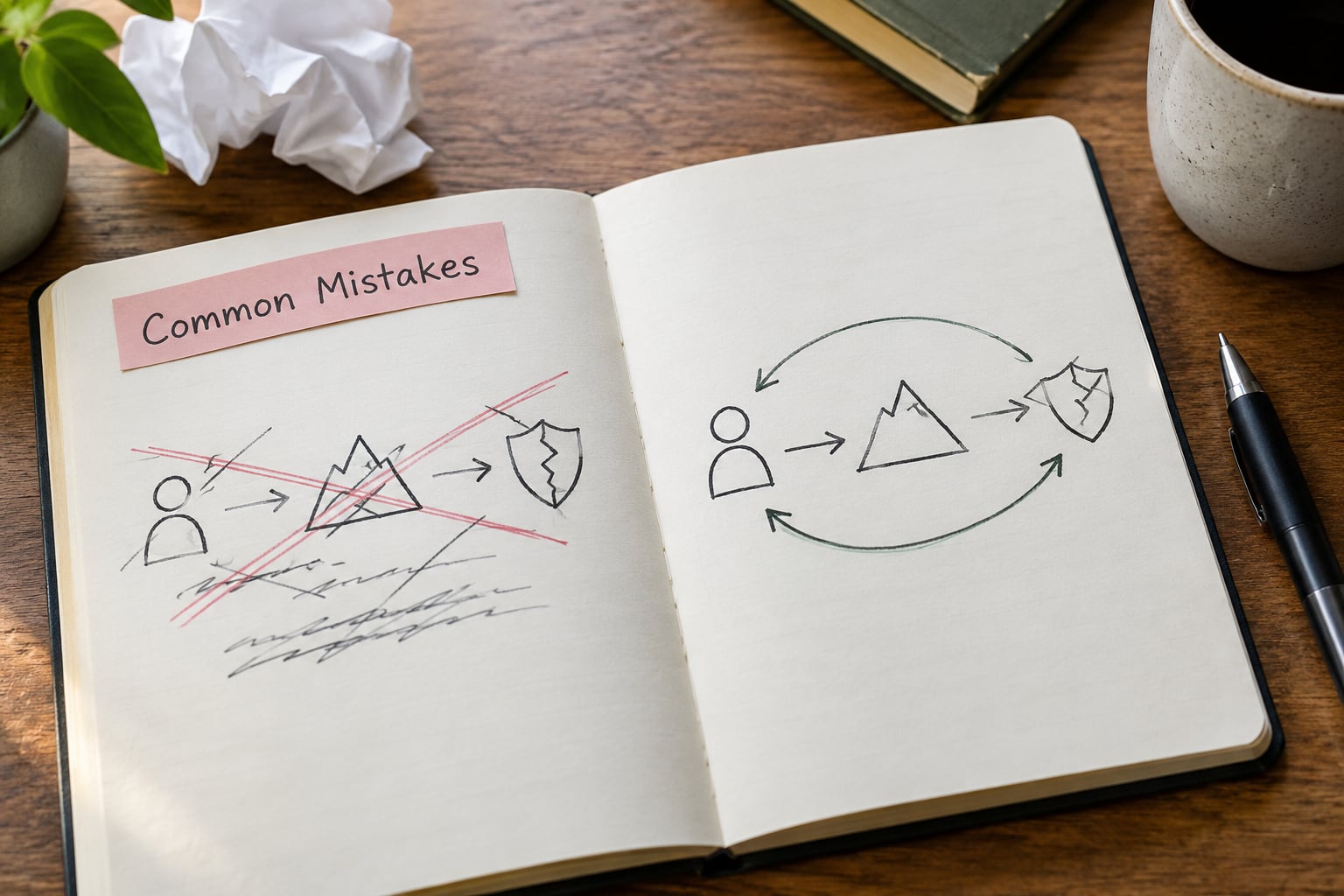
Almost every flat draft I have read fails in one of the same six ways. Find yours and the fix is usually small.
The conflict could be solved in one conversation
If a single honest talk would end the trouble, you do not have a story, you have an inconvenience. Add a reason the conversation cannot happen: one party cannot trust the other, the truth is unprovable, the deadline is hours away, or the person who must be convinced is not the person who is wrong.
Nothing is at stake
Ask what the protagonist loses if they fail, then ask what that loss does to them on a Tuesday six months later. If the honest answer is nothing, the conflict is decorative. Go back to your stakes list and pick something the character genuinely cannot lose.
The antagonist is passive or stupid
Antagonists should be at least as smart as the protagonist and better at one thing: resources, position, patience, or knowledge of systems. Make the plan work twice. Then let the protagonist find the third option nobody was guarding.
A strong antagonist makes the reader briefly agree with them. That is usually the test.
The same obstacle keeps returning with no escalation
That is the sagging-middle problem. Fix it by changing the cost rather than the obstacle: the same boss, the same bureaucracy, the same ex, but now the protagonist is losing sleep, money, and someone close to them in that order.
Characters argue but nothing changes
An argument that ends in a shrug is a recap, not conflict. Fix it by giving each side something concrete at stake in the room and by making them incompatible on a value, not just on facts. They cannot both be right, and neither will back down.
The character behaves out of character to serve the plot
This is the mistake writers defend hardest and regret most. When your careful, honest protagonist suddenly lies for no reason, the reader feels the author’s hand. Find the belief that makes the lie reasonable: what does she believe about this person, and what does she think she is protecting?
Bonus: tension mistaken for conflict
Conflict is obstruction. Tension is the reader’s awareness that something bad is coming. You can have plenty of atmosphere and no conflict at all, which is the answer to that frequently asked question about why quiet scenes feel important but read slowly. If nothing is blocked in the scene, the scene is waiting for its problem.
Frequently Asked Questions
What is conflict in a story?
Conflict in a story is the opposition between a character and what they want. It can be another character, a force, a society, a natural condition, a system, something supernatural, or the character’s own doubts and competing values. Conflict is what creates friction, suspense and change, and without it a plot has no reason to keep moving.
What are the main types of conflict in literature?
The six main types are character vs character, character vs self, character vs society, character vs nature, character vs technology, and character vs supernatural. The first three are usually grouped as external and internal conflict: character vs character, society, nature, technology and supernatural are external, while character vs self is internal. Most novels run at least two types at the same time.
How do I create conflict between two characters?
Give each character a clear goal that the other’s goal prevents. Friends and family make the strongest conflict because they already know each other’s weaknesses. Put the disagreement over a value rather than a fact, so neither side can be simply corrected, and give them something concrete to win or lose inside the scene, not just later in the plot.
How much conflict does a story need?
Enough that every scene is blocked by something and every attempt costs something. That does not mean constant arguments or danger. Quiet stories about marriage, illness, grief or money carry plenty of conflict; what they do not have is unblocked scenes. The test is simple: if a chapter could be deleted with no change to the outcome, that chapter has no conflict in it.
How can I make a plot more dramatic?
Raise the cost of failure rather than adding new events. Tighten deadlines, narrow the protagonist’s options, and let their successes create new complications. Make the opposition stronger and more reasonable, put two things the protagonist loves in conflict, and end scenes at the worst plausible moment. Drama comes from narrowed choices under pressure, not from louder events.
Can you write a story without a conflict?
You can write a story with no overt conflict, but it reads as a sequence of pleasant moments because nothing is ever at risk. Even slice-of-life fiction runs on small obstacles: a misunderstanding, a deadline, a stubborn relative, a pride that will not bend. What matters is not whether things go badly, but whether the characters have to choose.
Conclusion
If you take one thing from this, make it the sentence below and answer it in your notebook: my protagonist wants ___, ___ stands in the way because ___, and if they fail they lose ___.
Then open the draft, pick the first scene where nothing is blocked, and rewrite it so something the character wants is denied in the room. That single change fixes more flat plots than any amount of outlining, and it is the fastest way to learn how to create conflict in a story for yourself.