A run-on sentence happens when two independent clauses are joined with no punctuation and no connecting word to separate them, so the reader gets two ideas at once with no pause between. The fix is always one of four moves: a period, a semicolon, a comma plus a coordinating conjunction, or a subordinating word like because or when.
It takes most students about ten minutes to work through a printed draft with this process. You need nothing but a pen, your draft, and the independent-clause test below.
Table of Contents
- What You Need
- Step-by-Step
- Step 1: Read for Complete Ideas
- Step 2: Find the Independent Clauses
- Step 3: How to Avoid Run-On Sentences in Compound Sentences
- Step 4: Check Sentences with Dependent Clauses
- Step 5: Choose the Correction That Fits the Idea
- Step 6: Read the Sentence Aloud and Revise
- Common Mistakes
- Simple Editing Tips
- Frequently Asked Questions
- What is the fastest way to fix a run-on sentence?
- Can a comma fix a run-on sentence?
- Is every long sentence a run-on?
- What is the difference between a comma splice and a run-on sentence?
- Should I trust grammar-checking software to find every run-on sentence?
- How do I choose between a semicolon and a period?
- Conclusion
What You Need
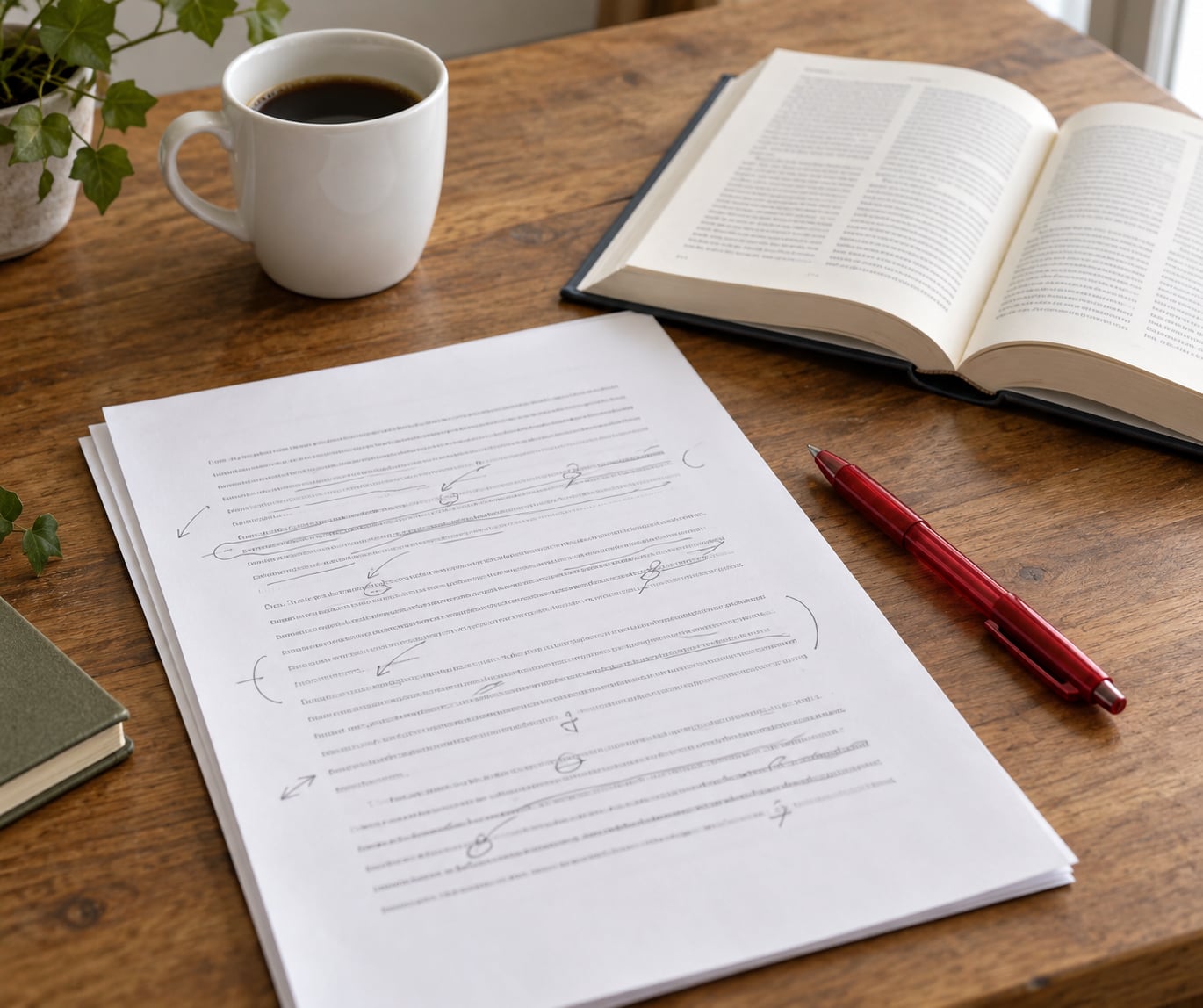
Three things, and none of them expensive. A printed copy of your draft, because run-on sentences hide badly on a screen. A red pen or pencil. And one rule you memorise before you start editing.
That rule: an independent clause has its own subject and its own finite verb, and it makes sense on its own. The library closed early is an independent clause. After the library closed early is not, because after leaves the clause waiting for a main clause to attach to. That waiting clause is a dependent clause.
Two independent clauses in a row, badly joined, is the whole problem. Everything else in this guide is a way of putting a boundary between them.
| Run-on type | What went wrong | The usual fix |
|---|---|---|
| Fused sentence | Two independent clauses run together with no punctuation at all | Add a period, or a semicolon, or comma plus a coordinating conjunction |
| Comma splice | Two independent clauses joined by a comma alone | Replace the comma with a period or semicolon, or add a coordinating conjunction after it |
| Polysyndeton | Three or more clauses strung together with repeated conjunctions | Cut some conjunctions, or downgrade one clause to a dependent clause |
Those three cover almost everything a teacher circles in red. The other error you will meet alongside run-ons is the sentence fragment, which is the opposite problem: a dependent clause left standing on its own with no independent clause to attach to.
Step-by-Step
Step 1: Read for Complete Ideas
Read the draft aloud, at normal speed, and listen for the point where your voice wants to stop but does not. That spot is almost always where two ideas collided.
Run: The test was on Friday I had not studied so I guessed most of the answers. Your voice ran out of air somewhere around Friday and kept going anyway.
Mark each spot with a slash in the margin. Do not fix anything yet. Marking and fixing are different jobs, and mixing them is why editing feels endless.
Step 2: Find the Independent Clauses
Take one marked sentence and do the only diagnostic that matters. Circle every subject. Underline every finite verb. What is left between them is the predicate.
The test was on Friday — subject the test, verb was, complete thought. I had not studied — subject I, verb had not studied, complete thought. Two independent clauses, jammed together. You have found the run-on.
If one of your circled chunks has no finite verb, it is a fragment instead, and the repair is different: give it a subject and verb, or attach it to the clause next to it. Students who skip this step tend to “fix” fragments with commas, which just moves the problem.
Step 3: How to Avoid Run-On Sentences in Compound Sentences
Once you have two independent clauses side by side, you have exactly four repairs. Pick one based on the relationship you want to show.
1. Use a period. This is the safest fix and the right one when the two ideas deserve equal weight or the second one is long.
Before: The test was on Friday I had not studied
After: The test was on Friday. I had not studied.
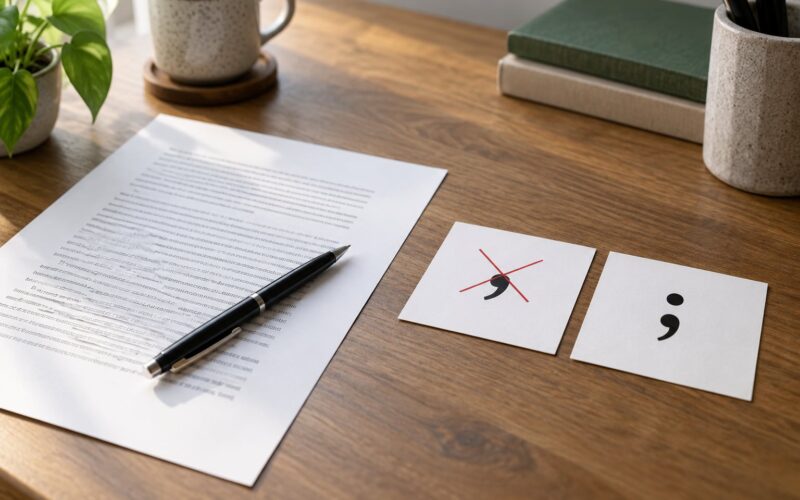
2. Use a semicolon. Use it when the two clauses are closely related and roughly equal in weight. A semicolon is a quieter full stop.
Before: The test was on Friday I had not studied
After: The test was on Friday; I had not studied.
3. Use a comma plus a coordinating conjunction. The seven coordinating conjunctions are remembered as FANBOYS: For, And, Nor, But, Or, Yet, So. Any of the seven makes a comma splice into a correct compound sentence.
Before: The test was on Friday, I had not studied
After: The test was on Friday, so I had not studied.
4. Use a subordinating conjunction. Words like because, when, although, since, while and after turn one clause into a dependent clause, and a dependent clause needs nothing but a comma to attach.
Before: The test was on Friday I had not studied
After: Because the test was on Friday, I had not studied.
Step 4: Check Sentences with Dependent Clauses
Most run-ons are not two independent clauses. They are one independent clause with a dependent clause pasted onto it, plus a comma where a full stop belongs. These look confusing but are easy once you see the pattern.
An introductory phrase at the front of a sentence takes a comma, even a short one: After class, I opened the book. A relative clause in the middle takes commas around it: The book, which was overdue, went back on the shelf.
When two independent clauses are joined, neither may be a dependent clause. A semicolon between a dependent clause and an independent clause is always wrong: Because the test was on Friday; I had not studied has no grammatical home. Split it into two sentences.
Sentence fragments are the neighbouring error worth knowing here. A fragment is a dependent clause standing alone, and no amount of punctuation rescues it.
Step 5: Choose the Correction That Fits the Idea
Two different repairs produce two different meanings. A period ends the thought and lets the next one start fresh. A semicolon says these two clauses are one idea split in half. A comma plus but sets up a contrast. A subordinating conjunction makes one idea depend on the other.
Take a single sentence and rewrite it four ways, then read all four aloud. The example that surprises students most is the semicolon version.
Original run-on: She wanted to sign up for the writing club she was too nervous to speak in front of a group.
- Period: She wanted to sign up for the writing club. She was too nervous to speak in front of a group.
- Semicolon: She wanted to sign up for the writing club; she was too nervous to speak in front of a group.
- Comma plus FANBOYS: She wanted to sign up for the writing club, but she was too nervous to speak in front of a group.
- Subordinating conjunction: Because she was too nervous to speak in front of a group, she wanted to sign up for the writing club. (loose) or Although she wanted to sign up for the writing club, she was too nervous to speak in front of a group.
Nothing about the grammar changed. What changed is which idea leads.
Step 6: Read the Sentence Aloud and Revise
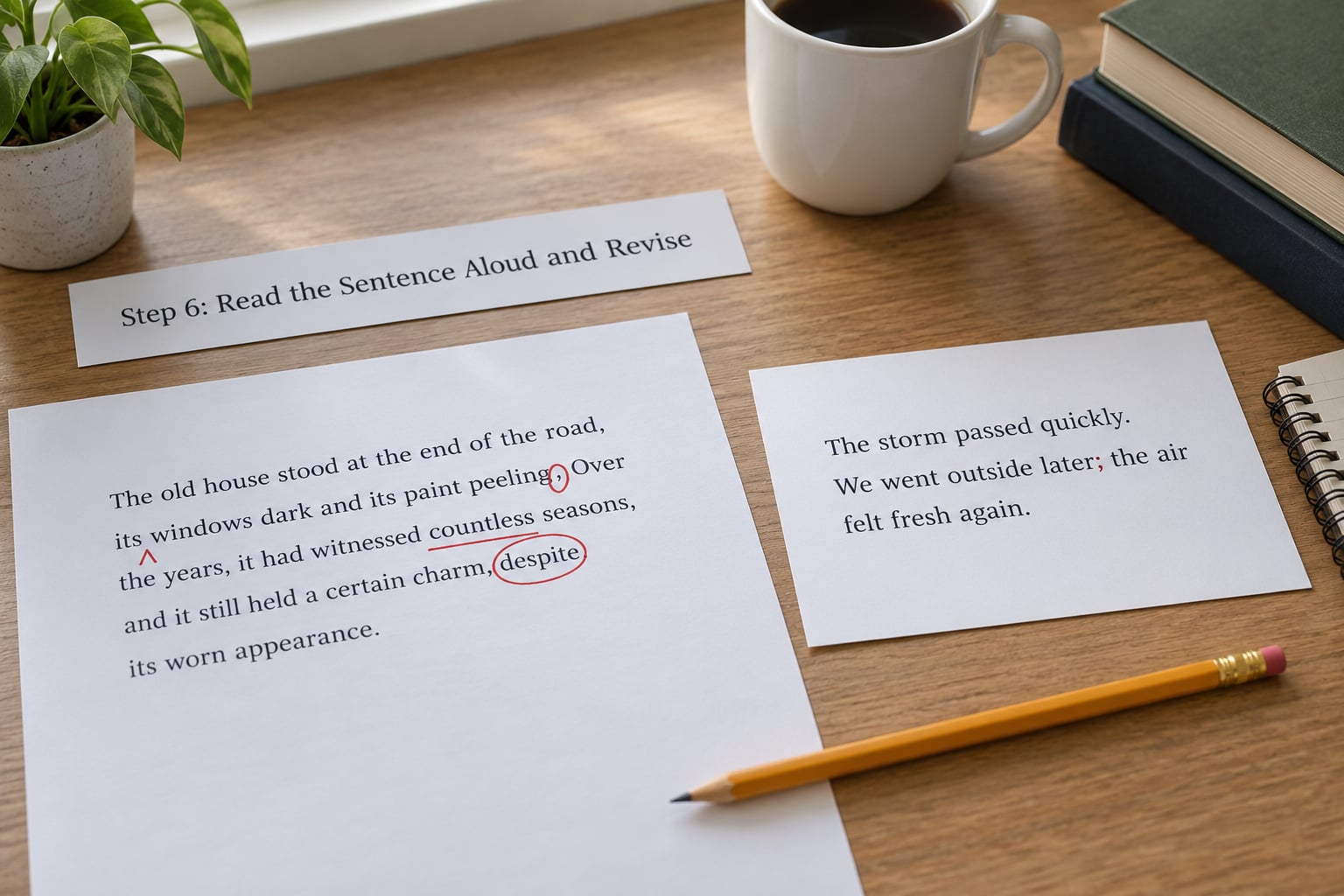
The final pass is short. Read each corrected sentence aloud at the speed you would speak it. If you run out of breath in the middle, either the sentence is too long or the boundary is in the wrong place.
Then do one last diagnostic that takes about a minute per page: count the conjunctions in each sentence. Three coordinating conjunctions in a row is polysyndeton, and it is where run-ons hide most often.
Common Mistakes
Adding commas where nothing joins. The test was on Friday, I had not studied. A comma cannot replace a conjunction or a full stop. Fix: add so, but or and, or use a period.
Under-punctuating. Two clauses with nothing between them at all. This is the fused sentence, and it is the easiest of the three to spot once you know to look.
Over-punctuating. A full stop after a dependent clause: After class. I opened the book. You cannot fix a fragment with a period. Attach the clause instead.
Semicolons in the wrong slot. Because it rained; the match was cancelled. That is two sentences wearing a semicolon costume.
Calling every long sentence a run-on. A sentence can run forty words and be perfectly correct if its clauses are properly joined. Length is a style question. Missing boundaries are a grammar question, and only one of them gets a red circle.
Writers on writing forums describe this last confusion more than any other. They also report the opposite fear, that fixing run-ons leaves them with choppy three-word sentences. Both problems come from editing without the clause test first.
Simple Editing Tips
- Circle subjects and underline finite verbs in any sentence that feels off. It takes five seconds and settles the diagnosis.
- Search your document for the pattern , and or , but. Every hit is a place to check whether the clause before it was independent.
- Read the draft aloud once, at speed, before you touch punctuation. Your ear finds run-ons faster than your eye.
- Vary sentence length deliberately. Aim for a long sentence, then a short one, then a medium.
- Check semicolons by reading them as the word therefore. If that word makes no sense at the join, the semicolon is in the wrong place.
- Leave the sentence alone once it is correct. Perfectionism costs more than run-ons.
Frequently Asked Questions
What is the fastest way to fix a run-on sentence?
Circle the subjects, underline the verbs, and see how many complete thoughts you have. Two or more means you need a boundary between them. Add a period, a semicolon, a comma plus a coordinating conjunction, or a subordinating word. Four choices, one minute per sentence once you have the habit.
Can a comma fix a run-on sentence?
Only when a coordinating conjunction follows it. A comma on its own between two independent clauses is a comma splice. A comma plus for, and, nor, but, or, yet or so is a correct compound sentence. So the test is simple: find a FANBOYS word right after the comma. If none is there, change the comma.
Is every long sentence a run-on?
No. Length and error are separate problems. A forty-word sentence can be perfectly grammatical if its clauses are joined correctly, and a twelve-word sentence can be a fused run-on. Judge each sentence by its boundaries, not its word count. Very long sentences are often worth breaking up for clarity, but that is a style choice rather than a correction.
What is the difference between a comma splice and a run-on sentence?
A comma splice is one specific kind of run-on: two independent clauses joined by a comma alone. A fused sentence is another kind, with no punctuation at all between the clauses. Polysyndeton is a third, where clauses are strung together with too many conjunctions. Run-on sentence is the umbrella term covering all three.
Should I trust grammar-checking software to find every run-on sentence?
Software catches many, but it regularly misses long sentences with several dependent clauses and flags acceptable comma splices between short clauses. Use it as a first sweep that highlights candidates, then confirm each one yourself with the clause test. Reading the draft aloud still catches things the software skips.
How do I choose between a semicolon and a period?
Use a semicolon when the two clauses are closely related and of similar weight, and a period when the second idea deserves its own emphasis or is long enough to need it. Read the semicolon as the word therefore. If therefore fits, the clauses belong together and a semicolon works.
Conclusion
Start your next revision the same way every time: circle the subjects, underline the finite verbs, and count how many independent clauses you actually wrote. The count tells you what to do next.
Two clauses with no boundary between them get a period, a semicolon, a comma plus one of the FANBOYS, or a subordinating word such as because or when. One independent clause and a dependent clause just need a comma. Three conjunctions in a row means you have written a polysyndeton and should cut one of them.
Ten focused minutes on a printed draft catches more run-on sentences than any rule you can memorise.